In this interview, I discuss my book, Diaphysics*. While it's a work of philosophy, it's wide-ranging, and there is an extensive discussion of language. Since this blog is titled The Metamodern Poet, there will be a few discussions of that world view. After viewing this video, think about what these ideas might mean for poetry. How might different ways of thinking, different values, affect your poetry? My philosophical ideas may simply be a bunch of nonsense to you, and that's fine. I only hope it will stimulate thought, and if it gets a reaction of any kind, and if it stimulates the creation of poetry, then it will have done its job.
Showing posts with label metamodernism. Show all posts
Showing posts with label metamodernism. Show all posts
Monday, January 2, 2023

Monday, December 12, 2022
Against Authenticity
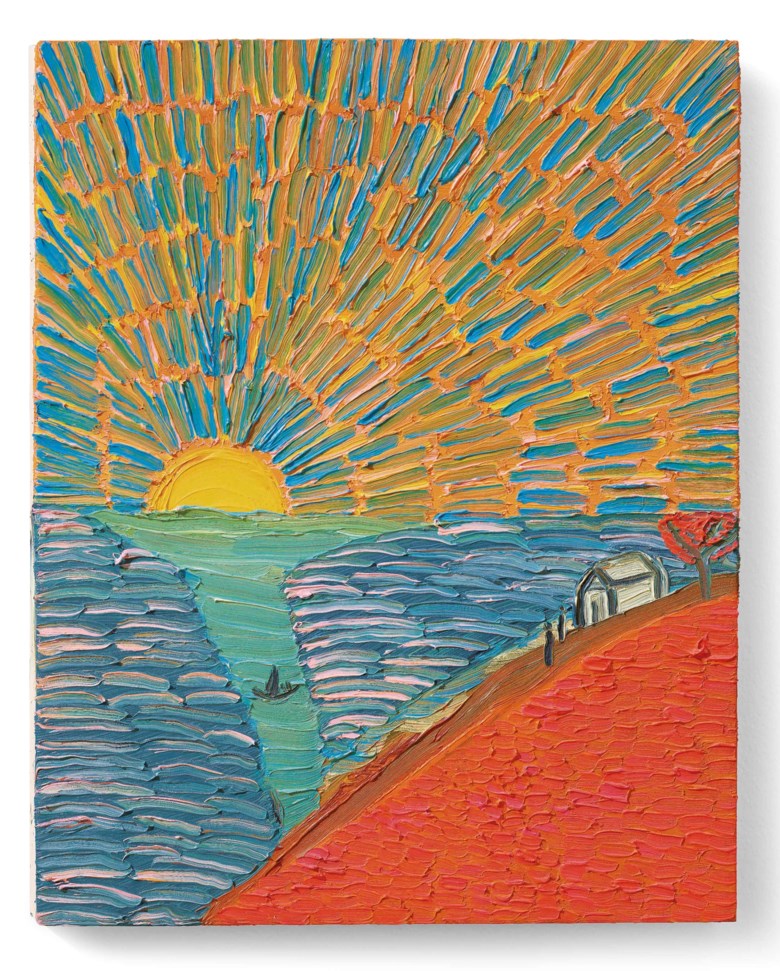
The Journey Home by Matthew Wong
Becoming a good poet is a process. It’s a learning process. It’s a developmental process. If you are the same poet today as you were ten years ago, you haven’t grown as a human being, let alone a poet. We of course learn from our experiences, but we also learn from reading poetry (or listening to music, or viewing paintings, etc., depending on your art).
I’ve already talked about what I call the “cult of self-expression,” but here I want to talk about the related “cult of authenticity.”
In the most recent Disney version of Pinocchio, Pinocchio decides he wants to remain a marionette rather than to become a real boy, as happened in the first Disney film. This is a significant change in the story. In the first version, Pinocchio is tested and tempted (by real temptations, like alcohol and tobacco, vs. the new version), and as a result he grows and develops. Part of that development is that he becomes a real boy. It’s a justified transformation, as he has earned it. However, in the newer version, Pinocchio decides to remain his “authentic self.” Meaning, he rejects growth and development and transformation.
This, in the end, is what is meant by “authenticity.” To remain “authentic” means to reject learning anything because it endangers your authentic self. It rejects moral development just as much as artistic development. You have to develop your morals and your values. Yes, we have genetic proclivities to certain moral actions and values, but that doesn't mean we're stuck with them.
This rejection of development is at the root of the authenticity cult and the self-expression cult. You don’t have to mature, change, learn, develop, etc., because all of those will get in the way of you being authentic and engaging in self-expression. But if you have children, you know you don’t really want them to be their “authentic selves.” You want them to become better selves.
Our aim should, rather, be excellence. Now, excellence isn’t perfection. Perfection isn’t an option. Excellence is continual improvement of your craft (or your moral self, or your learning, or any other aspect of yourself).
Nobody wants to read poetry from your “authentic self.” Your authentic self isn’t all that interesting. Nobody wants to listen to you play “authentic” guitar, uninfluenced by anyone. That would just be a mess, chaos, noise. And that’s really what your authentic self is. Rather, you need to develop style. Your style is developed by emulating others, finding those whose style impresses you, and transforming those styles into your own through combination. This is true of all the arts, and it’s true of poetry.
Authentic talent always develops within a tradition. Your tradition is not likely to be the same as another’s tradition. Someone who loves Romantic poetry is going to write quite different poems than someone who loves the Modernists, like T.S. Eliot, Wallace Stevens, and Eluard; and they will write different poems from someone who works within the postmodern tradition. As a Metamodernist poet, I work within not just these traditions, but am influenced by Japanese and Chinese poetry, Renaissance and Medieval and Ancient poetry, and various African and Latin American traditions. Obviously, then, my poetry will be different still.
All of this is true of all the arts. My 10-year-old somehow understands this quite well. He is teaching himself guitar, and his musical influences are The Beatles, Nirvana, and Gorillaz. He also has tried to learn AC/DC, Queen, and Bob Dylan. He performed “We Don’t Talk About Bruno” for a school talent show. It will be interesting to see how these converse and converge to become his own style. In fact, he already plays around with creating his own compositions, and they are often quite upbeat. He will also, though, find other bands he wants to emulate, and they will provide further foundation for his style. Thus, it will evolve over time. His artistic self will develop over time, and that’s as it should be.
This is what each of us should do as poets as well. I strongly encourage each and every one of you to become as broadly influenced as possible, across time and cultures. Poetry needs a renewal, and the way to do it is to embrace the entirety of the past, to embrace every tradition from the most ancient to postmodernism, and to create new things within that global frame. Each of us will find their own style, from a combination of our own personal experiences and the peculiarities of what you read, hear, and see. This is how you become part of the poetic tradition.
Monday, November 14, 2022
A Mirror or a Lamp?
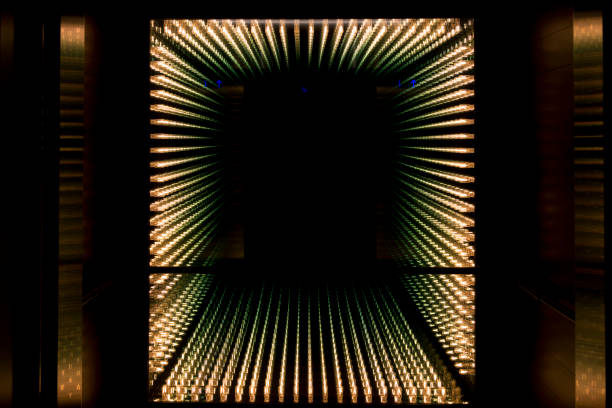
Is poetry a mirror or a lamp on the world?
If poetry is a mirror on the world, reflecting what is there, then it is surely a funhouse mirror, distorting what is there. Everything is bent, fragmented, stretched, and/or widened. Many free verse poets argued precisely this, that it would be their free verse poetry that would finally provide this mirror on the world, no longer distorted by rhythm and rhyme. The surrealists also made this claim. Who, now, would agree that the surrealists provided any kind of mirror?
If poetry is a lamp, lighting up the darkness in the world, then it is surely more a moon than a sun. (Ah, but the moon itself is reflective!--a kind of mirror of the sun, imperfect and dimmer.) While the Greeks considered Apollo, the sun god, to be the leader of the Muses, practically every other polytheistic mythological tradition considers the moon goddess to be the source of poetry. Poetry is thus considered to be a product of the moon--a dim light within the darkness, playing with the shadows, perhaps part of the shadows themselves, with the shadows moving, undulating, as the poem's light crosses the darkness, faintly uncovering what lies where people fear to look.
Orpheus descends into the underworld to retrieve his wife from death, but can only return with his poetry. There are many traditions of men descending into the underworld to retrieve something but are only able to return with the gift of poetry.
Plato, in the Allegory of the Cave, instead shows a man ascending out of the cave and into the sun, where he is enlightened. He then returns to the cave to bring the people knowledge of what he saw. He argues that most would reject the philosopher bringing the good news of the sunlight outside the cave. The philosopher thus comes closest to bringing a lamp--but in reality, he's attempting to bring the people to the lamp/sun, which requires persuasion. If you live in dimness and only view shadows, how could you believe in the light?
The poet, on the other hand, can bring the same information to the public without rejection. Why? Because the message is hidden under imagery, metaphor, and sound. The reader is first enchanted by these things, which creates the conditions for acceptance. Of course, this is hardly perfect. There have been plenty of persecuted poets in the world--burned at the stake, in its various metaphorical forms.
Plato wrote in dialogues in an attempt to bring the light of philosophy to the people in poetry. He felt the best poetry was that which was true, and which was trying to get people to see the truth. If this is your goal, remember that you have to do it under a veil.
Too many attempt to make their poetry either a lamp or a mirror. Didactic poetry, ham-handed political poetry--propaganda for a party and an ideology--are almost universally failures. The existence of the brilliant Langston Hughes hardly proves the opposite. Neither you nor I are Langston Hughes. And he had enough sense to write his poems by moonlight.
Having the right understanding of poetry will help you write better poems. For many of you, I am sure that you are already in this kind of lunar headspace and are thus proper lunatics. Some of you are perhaps a little (or a lot) prone to wanting to shine the sun on the world. Alas, such poetry doesn't last, as it mostly annoys readers, preaches to the choir for those who do like it, and really doesn't last. Instead, bring your truths to the world in imagery, metaphor, sound, fable, parables, mythology, and other forms of narrative. Afraid there will be many interpretations of your work? Then write essays. Everyone will bring their own perspectives to your poetry, when it's good, and if you're particularly good (and if you're particularly metamodern), you'll bring multiple perspectives to your reader within your poems themselves.
Monday, August 22, 2022
Metamodern Poetry: An Introduction
Abduction, by Jesse Mockrin
Here, at last, is the promised post on metamodern poetry--or, at least, what I think metamodern poetry is and ought to be, or at least, how I practice metamodern poetry. In other words, I'm going to present you with my theory of poetry writing. In any class on poetry writing--even in a blog of mini-lessons--one ought to know the teacher's theory of poetry. That way, you know where they are coming from, and you can make up your own mind about what you want to pay attention to and what you want to ignore in the development of your own poetry.
There are several ideas on what "metamodernism" means, from cultural analyses to aesthetic ones. Obviously, we are more interested in the aesthetic aspects, but both are concerned with the synthesis of Modernism and Postmodernism, and with the affirmation of paradox. In aesthetics, the affirmation of paradox includes such things as bring both serious and ironic simultaneously, or in turn.
Now, depending on what one means by "Modernism," a synthesis of Modernism with Postmodernism can mean several things. Aesthetic Modernism is typically considered to have developed in the late 19th through early 20th century. Literary Modernism can be considered to have started with any number of writers, though I would argue that its foundations are certainly in such writers as Walt Whitman (free verse), Flaubert, Dostoevsky, and Baudelaire.
With the aesthetic Modernists, there is a self-conscious break with past forms and an infusion with the ideas of people like Nietzsche, Freud, and Marx. However, there is another kind of Modernism, which starts much earlier, with the work of Descartes, and which has its origins in the Renaissance (which itself created a break with the past, with Medieval culture). This era comes to an end with the ideas of Nietzsche, Marx, and Freud, who are the fathers of Postmodern culture, which can be considered to have begun (in my mind) at the same time as Aesthetic Modernism.
Meanwhile, what we consider to be Aesthetic Postmodernism began in the 1960s with the advent of pop art in the visual arts and in literature (with Don Barthelme, who is often considered the father of postmodern literature). Postmodern art tends to be fragmented, and gradually became academic art, dominated by university artists and writers. Postmodern art gave us and is the product of the creative writing class at our universities.
Metamodernism in both cases is an attempted synthesis of Modernism and Postmodernism. However, an Aesthetic Metamodernism that only embraces and synthesizes (in an atonal fashion, without full synthesis of either) Aesthetic Modernism and Postmodernism is going to be different than one that embraces and synthesizes (again, agonally) Cultural Modernism and Postmodernism. After all, the literature of Cultural Modernism included Enlightenment literature, Romantism, Neo-Classicism, Realism, and Naturalism, while Cultural Postmodernism includes Aesthetic Modernism and Postmodernism.
For my money, I think that Aesthetic Metamodernism ought to include influence from all of the movements within both Cultural Modernism and Cultural Postmodernism. A consequence of this is that I fully embrace all of the formalism used in the literatures of the Enlightenment, Romanticism, Neo-Classicism, Realism, and Naturalism as well as the aesthetic discoveries made by the Modernists and Postmodernists of the past 150 years or so. It makes little sense to me to only embrace Aesthetic Modernism and Postmodernism, as there is much more continuity between them than the Cultural versions.
Indeed, I would argue that Aesthetic Postmodernism is the "normal art" of Aesthetic Modernism. Here, I'm using Thomas Kuhn's paradigm theory and applying it to the arts. Aesthetic Modernism was a paradigm shift, but Postmodernism wasn't. Postmodernism was merely a fine-tooth development of all that Modernism had discovered in the aesthetic realm. This had happened, too, with the Academic Art of the 19th Century, where the Academic Artists merely covered the same ground as the Renaissance, Baroque, and Rococo periods, and whatever they developed was well within that paradigm. Postmodern art, too, does the same thing--and it's even more properly called "Academic Art" due to its almost exclusive presence in our Universities and by those trained in our Universities.
If Metamodernism is to be a new paradigm shift, it will have to do something revolutionary in relation to the Aesthetic Modernism/Postmodernism that runs through Cultural Postmodernism.
What will that look like? I have a few suggestions. While such wonderful novelists as Dave Eggers, Michael Chabon, and Jonathan Franzen are now considered Metamodernists, from the standpoint of their being part of the New Sincerity, I have to wonder if they are truly revolutionary. Perhaps closer to what I'm talking about are writers like Zadie Smith, Haruki Murakami, and Frederick Turner, who synthesize the Modern with the Postmodern, and their own cultures with others. Further, Turner writes sci-fi epic poetry, which synthesizes a more ancient form with a more contemporary one.
My own version of Metamodernism looks more like Frederick Turner's, as he describes his aesthetics in his nonfiction books, Natural Classicism*, Beauty*, and The Culture of Hope*. In other words, a synthesis of Postmodernism, Modernism, Medievalist literature, and ancient literature, as well as not just the West, but cultures across the world, from (ancient to contemporary) China and Japan to India and Iran, Mali and Nigeria, the Americas, and throughout the world. This would include a recognition that there's no such thing as an "African culture," for example (an idea which is the ultimate kind of kitsch), but rather that there are hundreds of different cultures across Africa, about which we should all learn something, and whose literatures we ought to be reading just as much as we ought to be reading the works of the ancient Greeks and Romans. In other words, in Turner's formulation, we ought to embrace a "natural classicism."
If you were to embrace natural classical metamodernism, what kinds of poetry do you think you would produce?
Wednesday, July 6, 2022
Welcome
Here at The Metamodern Poet, I am going to primarily give advice about writing. I am myself a poet, and I am primarily a formalist poet. However, I did not start off that way. Like many people, I started off writing free verse poetry. While I did have a tendency to--mostly accidentally--use fairly regular rhythms, and while I was (and am) partial to alliteration, it was only in the past 20 years that I started writing formal verse on a regular basis.
Among the advice I will give will be justifications of that choice. There are good reasons to write in regular rhythms, to use rhymes, alliteration, assonance, consonance, and parallelism, among other tropes. I not only want to advise you on your writing, but justify the advice.
Now, you are probably wondering: why The Metamodern Poet? There will be a full post on that in the near future, but the short answer is that metamodernism is a reaction to the limits of postmodernism, including postmodern art and literature. The metamodern poet combines what we learned from postmodernism with what we learned from Modernism, the Renaissance, Medieval poetry, and ancient poetry--and not just the European tradition, but all the world's traditions. That is, metamodern literature is intended to span both time and place in influence. The sonnet as well as the ghazal.
I hope you will enjoy the advice I give here. I look forward to sharing my ideas with you, and I look forward to hearing from you!
Subscribe to:
Posts (Atom)
-
If you were to come across a ten-syllable lined poem, you would probably expect it to be iambic pentameter. And you would probably be right...
-
Abduction, by Jesse Mockrin Here, at last, is the promised post on metamodern poetry --or, at least, what I think metamodern poetry is and ...
-
* Verse is metered language. What, though, is meter? "Meter" comes from the Ancient Greek "metron," meaning "measu...

