Showing posts with label postmodernism. Show all posts

Monday, December 12, 2022

Against Authenticity

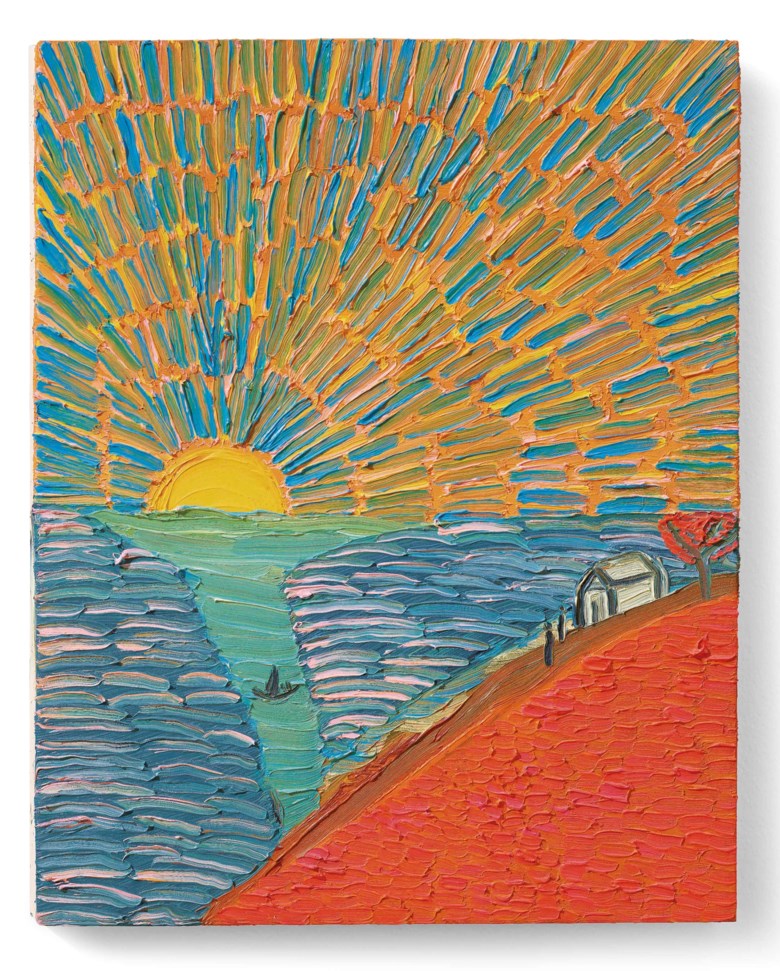
The Journey Home by Matthew Wong | Christie's
        The Journey Home by Matthew Wong

Becoming a good poet is a process. It’s a learning process. It’s a developmental process. If you are the same poet today as you were ten years ago, you haven’t grown as a human being, let alone a poet. We of course learn from our experiences, but we also learn from reading poetry (or listening to music, or viewing paintings, etc., depending on your art). 


I’ve already talked about what I call the “cult of self-expression,” but here I want to talk about the related “cult of authenticity.” 


In the most recent Disney version of Pinocchio, Pinocchio decides he wants to remain a marionette rather than to become a real boy, as happened in the first Disney film. This is a significant change in the story. In the first version, Pinocchio is tested and tempted (by real temptations, like alcohol and tobacco, vs. the new version), and as a result he grows and develops. Part of that development is that he becomes a real boy. It’s a justified transformation, as he has earned it. However, in the newer version, Pinocchio decides to remain his “authentic self.” Meaning, he rejects growth and development and transformation. 


This, in the end, is what is meant by “authenticity.” To remain “authentic” means to reject learning anything because it endangers your authentic self. It rejects moral development just as much as artistic development. You have to develop your morals and your values. Yes, we have genetic proclivities to certain moral actions and values, but that doesn't mean we're stuck with them. 


This rejection of development is at the root of the authenticity cult and the self-expression cult. You don’t have to mature, change, learn, develop, etc., because all of those will get in the way of you being authentic and engaging in self-expression. But if you have children, you know you don’t really want them to be their “authentic selves.” You want them to become better selves.


Our aim should, rather, be excellence. Now, excellence isn’t perfection. Perfection isn’t an option. Excellence is continual improvement of your craft (or your moral self, or your learning, or any other aspect of yourself). 


Nobody wants to read poetry from your “authentic self.” Your authentic self isn’t all that interesting.   Nobody wants to listen to you play “authentic” guitar, uninfluenced by anyone. That would just be a mess, chaos, noise. And that’s really what your authentic self is. Rather, you need to develop style. Your style is developed by emulating others, finding those whose style impresses you, and transforming those styles into your own through combination. This is true of all the arts, and it’s true of poetry. 


Authentic talent always develops within a tradition. Your tradition is not likely to be the same as another’s tradition. Someone who loves Romantic poetry is going to write quite different poems than someone who loves the Modernists, like T.S. Eliot, Wallace Stevens, and Eluard; and they will write different poems from someone who works within the postmodern tradition. As a Metamodernist poet, I work within not just these traditions, but am influenced by Japanese and Chinese poetry, Renaissance and Medieval and Ancient poetry, and various African and Latin American traditions. Obviously, then, my poetry will be different still. 


All of this is true of all the arts. My 10-year-old somehow understands this quite well. He is teaching himself guitar, and his musical influences are The Beatles, Nirvana, and Gorillaz. He also has tried to learn AC/DC, Queen, and Bob Dylan. He performed “We Don’t Talk About Bruno” for a school talent show. It will be interesting to see how these converse and converge to become his own style. In fact, he already plays around with creating his own compositions, and they are often quite upbeat. He will also, though, find other bands he wants to emulate, and they will provide further foundation for his style. Thus, it will evolve over time. His artistic self will develop over time, and that’s as it should be. 


This is what each of us should do as poets as well. I strongly encourage each and every one of you to become as broadly influenced as possible, across time and cultures. Poetry needs a renewal, and the way to do it is to embrace the entirety of the past, to embrace every tradition from the most ancient to postmodernism, and to create new things within that global frame. Each of us will find their own style, from a combination of our own personal experiences and the peculiarities of what you read, hear, and see. This is how you become part of the poetic tradition.

Monday, October 31, 2022

Against Self-Expression

If you search for images of "self-expression" on Google, you'll get a collage of photos that are going to look like this. I could think of no better way of showing exactly what I mean when I talk about--and criticize--self-expression. 

The irony here is that in all of this so-called self-expression, the results are almost universally identical. It's all a miss-mash, with lots of color. What this suggests is that everyone's self-expression is like everyone else's self-expression. And what does that mean for either the self or it's expression? It means you're just like everyone else if this is what self-expression looks like. And that's precisely the problem with self-expression as art. It isn't art. It isn't even, as one of the pictures suggests, self-love. Love is always of a particular thing or person, and if there's anything this example of self-expression is not, it's particular. 

 With that kind of introduction, it's probably not surprising that I would say that perhaps the worst thing that ever happened to poetry was the emergence of the cult of self-expression. Although one can find this cult at play in the other arts, it seems to have hit poetry the hardest, and ruined several generations of poets. 

Of course, the opposite end of this is the kind of academic poetry that is only produced in university English departments, only read by other academic poets, and only commented upon by academics trying to get scholarly papers published--a task made easier when one is dealing with "difficult" poetry. 

Karl Popper once defined true artists as those who are attempting to work out artistic ideas and problems--which is to say, those related to myth, structures, traditions, etc., in light of changing social conditions in which the artists are working. It is an evolutionary process, and it always is in touch with what came before it. 

Certainly, one could argue that contemporary academic poetry is doing precisely that. However, the avant-garde, as the academic poets fancy themselves to be, pride themselves in making radical breaks with the past. This is, of course, unlikely to be literally true, in much the same way that the surrealists never really allowed their "automatic writing" to go unaltered (a simple example: what are "automatic" line-breaks?). 

The real problem with what I'm calling academic poetry is that it, much like academic art in general, is created after the "artist's statement" is created--even if it's created only in the artist's head. This is in part the fault of most of our artists having become academic artists because they first passed through university classes. 

The funny thing, though, is that the undergrad poetry writing classes all tend to encourage "self-expression." The professors don't want you to stifle your self-expression by using form or any kind of constraint. In the meantime, many of them are writing poetry most of their students wouldn't understand. As the creative writers move into grad school, those who are writing more academic poetry tend to get more encouragement while the self-expression poets get left by the wayside. 

One of the main problems with self-expression poetry--and the reason it gets left by the wayside, and why most such poets eventually stop writing--is that there is really only so much self to express. Most people are like most other people. And really, almost nobody has anything particularly interesting to say--and if you do have something interesting to say, it's likely going to be said in a few poems, a few short stories. And then, you'll be done. 

While the academic poets do seemingly at least try to work out some kind of artistic problem, the problem they have is that they don't produce anything anyone wants to read. Not even the academics writing scholarly papers on today's academic art aren't interested in it. They just need to publish, and it's easier to publish something on a work that is contemporary and difficult and, therefore, hasn't been touched by anyone else, than it is to try to say something new about Shakespeare's sonnets, for example. 

This would seem to put us in a quandary. If self-expression doesn't create lasting art or artists, and academic poetry isn't going to be read by anyone, when where does that leave us? 

Fortunately, these are not the only options.

Another way forward is to first abandon self-expression as self-centered, narcissistic, and indulgent; then, we need to familiarize ourselves with the global traditions, become global classicists, and familiarize ourselves with the world's myths, poetic structures, and forms. We must keep in mind, though, that postmodern academic art is now part of that tradition. It was at least participating in the art of poetry in the Popperian sense, even if it sent itself into abject unpopularity due to the direction the poets went with it. However, to move forward, we have to bring things back to foundations, writing works that people would actually want to read, because they tap into the brain's love or rhythms, sounds/music, and archetypal imagery. Challenge, yes--but do so from a place of familiarity. 

None of this is to say that you will no longer appear in your poetry. How is that even possible? Your poetry is necessarily going to reflect your world view, your attitudes, your fundamental beliefs, your passions, and so on. How can they not? Just don't make the mistake of either thinking that your art is all about you, and do not think your poetry is going to change the world because you're undermining capitalism by subverting grammar or some such nonsense. You're not. That's not how poetry works. Its power is elsewhere. 

Remember, the Muses are the daughters of memory and inspiration, of what your brain retained of external knowledge, and the way your brain unconsciously processed that knowledge through your emotions. The "you," the "self" that is being expressed is in that unconscious processing leading to inspiration. It's not vomiting your emotions onto the page. Indeed, self-expression is the subversion of poetry to your emotions, ideas, and thoughts rather than entering into a dialogue with the world's other poets, and your audience. You have  to love the art enough that you want to serve it rather than make it serve you. And that means entering into the global history of poetry, bringing not just yourself, but your contemporary society, culture, and knowledge with you.

Monday, October 10, 2022

Alienation and Hating Poetry

*

In The Hatred of Poetry, Ben Lerner, a poet himself, makes the argument that people hate poetry because 1) they think that just because they are a language-using human, they ought to be poets themselves, and 2) actual poetry fails to live up to our ideal of Poetry. 

My gut reaction was that this was utter nonsense. However, I came to realize that there are a few other fields in which this is true. Take economics. Everyone thinks they ought to be able to make pronouncements about economist just because they are human beings, we buy and sell in the marketplace, we work, and so on. We make value judgments about people's behaviors, often envy those who are better off than us, and typically believe actual economies fail to live up to our ideal Economy. As a result, most people hate economics and economists. 

I would add to this psychology, sociology, and political science. 

At the same time, there are a number of areas where people don't make this same mistake: math, physics, chemistry, biology, and even many of the other arts, including sculpture and painting (though some Modernist and postmodern works have people saying, "I could have done that" or "My three year old could have done that"), music and acting are typically things we don't think we can do without some degree of expertise.

Why is it that people who don't read poetry and don't like poetry feel a need to express an opinion about poetry when those same people wouldn't do the same thing about recent publications in mathematics? It seems there are a set of things people do that others seem to hold in contempt because they fancy themselves able to do them, while there is another set of things people seem to admire (or at least not hold in contempt) simply because they know they couldn't possibly do them.

The reason people don't like poetry may have something to do with the fact that everyone thinks they can do it, and that bumps up against what actual poets are doing. Much like economists--everyone thinks they understand the economy, and they get mad when an economist comes along and tells them they're wrong about how they think the economy works. There is a disconnect between what the person thinks they can do and what the experts in fact do, between what the experts understand and what the average person understands. 

Why, then, do people who hate poetry love songs? After all, isn't a song really just a poem? Of course. But songs are more directly tied into music, and only rarely are songs constructed such that they are as complex as many poems often are. More, they are heard rather than read, and reading is a difficult cognitive process which we can only do because the brain itself reconstructs itself--certain parts of itself are already designed for other things--in order to be able to read. Then, what is read has to be passed through this section of the brain before it is sent to the language portions of the brain. The musical element poetry (when present) is suppressed relative to songs, so poems are neither really read nor sung while, at the same time, both read and sung. 

We can look at this in another way, by comparing Shakespeare read and Shakespeare viewed/heard. The same people who find Shakespeare "boring" when they read him are excited watching a play (or film). The same things that bore them when they read Shakespeare move them to fear or laughter or tears when they watch the play performed and hear the words spoken. Why is it boring when read and not boring when viewed (ignoring those who still find it boring when viewed, since other issues may be at play there--I am only interested in the disconnect between the attitudes of reading vs. hearing/viewing). This would point to my suggestion that, in the case of poetry, part of the disconnect comes about from the fact that poems are read, which makes them, in many ways, more complicated. 

The fact that poems are read rather than heard also invites contemplation and analysis. One can look at the words and think about their varied meanings. This further complicates one's relationship with poems. The more you interact with a poem, the less likely it seems you are able to write one. Yet, you are still convinced that you ought to be able to write a poem. It's all just language, after all, and you are a member of a language-using species. 

When we take literature classes, it's not uncommon to hear that poetry is a "higher" form of language. The problem is, if poetry is a "higher" form of language, and language makes us human, then poets are logically, it would seem, a "higher" form of human. Who wants to believe there are higher forms of human than themselves? Who doesn't want to be a higher form of human? Thus, many likely feel the poets are looking down on them more than a bit, and this breeds contempt, as all (perceived) elitist behavior breeds contempt for those exhibiting it. It probably doesn't help that many contemporary poets are in fact elites who love to flaunt their elitism in the creation of works that only fellow-poets are capable of understanding (or at least who claim to understand). This, perhaps, is one major source of hatred for (contemporary) poetry.

The same belief doesn't necessarily apply to painters. We may be impressed with the work of a painter, but we don't think the person is a "higher" form of human. We consider them to just be an artist expressing themselves. It's something we can't do, true, but for some reason we just chalk it up to practice or a skill we simply weren't born with. The fact is that, like artists, poets are just artists expressing themselves. Poetry writing is simply a skill honed through practice. There may be something in us that drives us to express ourselves--in our case, in language--but that again makes us no different from any other kind of artist. Language is our medium, but that fact doesn't necessarily make us a higher form of human. 

Lerner suggests that these attitudes many people feel toward poetry are a consequence of Plato's attitude toward poets. The Greeks considered poets to be inspired by the Muses, meaning they were conduits for the gods. They were chosen by the gods. Meaning they were special. This is another way in which people think poets are some kid of elite. While we in the West seem to still have that attitude, even if not quite expressed as God/the gods favoring the poets, the question is if other cultures hold this same view and thus think the same way about poets. Or, are their attitudes toward poets more like our attitudes toward painters and mathematicians? 

I would argue, then, that people tend to express contempt toward those things which they think ought to be easy, but which "experts" in the field keep demonstrating to be complex. They have respect for difficult things they think are difficult, and they likely don't think much at all about those things that they think are easy that are in fact easy (for pretty much everyone), or at least easy to understand. You might not be able to play the guitar, but rock music seems easy to understand. Jazz, on the other hand, is more difficult to understand, and as a result many people don't seem to much care for it (part of this may also be simple familiarity--as we learn to hear something, we grow to like it). 

Overall, I don't think that having or lacking interest in any of these particular things is what's at play here. There are sets of knowledge/skills we seem to respect and others which we do not. A person may not be able to do math, and may not personally like doing math, but still hold a great mathematician in high esteem. They're not going to engage in the math nor make the mistake of having an opinion about the math being done that they cannot do. As a result, they simply respect the mathematicians who can do those things. But when you have a person who is not an economist and is generally ignorant of economics, that doesn't mean they won't have an opinion about economics. The same person who lacks interest in learning math and economics will refrain from having an opinion about math and give their opinion about economics. 

So it seems that interest isn't really what's at play. Again, I think it's precisely the disconnect between apparent simplicity and the real complexity that creates this contempt toward poetry, economics, sociology, and psychology, among other things. I know I don't know anything about how to repair a car, so I respect auto mechanics. For the longest time I thought I could write and understand poems when I really couldn't. Thus, I started out with a hatred of poetry and a degree of contempt for poets--which has changed as I have slowly learned to understand poems and how to write them. I suppose I lost my hatred of poetry because I never really bought into the idea that there was this unattainable ideal of Poetry which can never be realized by any real poem. 

The less disconnect, the less alienation one feels, the less hatred one feels. That's probably something to consider in regards to things well beyond poetry. 

What do you think? Is there anything we contemporary poets can do to reduce the hatred of poetry, short of ostensibly "dumbing down" our poetry? Is the problem the way people write poetry, as esoteric texts? Is the real problem that contemporary poetry, like much contemporary art, is simply not perceived as beautiful? Is it because we only read and rarely ever listen to poetry? (Poetry slams are quite popular, and draw in non-poets, while poetry journals almost never draw in non-poets.) What can we do so readers are no longer alienated from our art?

Monday, August 22, 2022

Metamodern Poetry: An Introduction

Join us free HERE. Meeting ID: 938 7189 9376 | Passcode: 786705Abduction, by Jesse Mockrin

 Here, at last, is the promised post on metamodern poetry--or, at least, what I think metamodern poetry is and ought to be, or at least, how I practice metamodern poetry. In other words, I'm going to present you with my theory of poetry writing. In any class on poetry writing--even in a blog of mini-lessons--one ought to know the teacher's theory of poetry. That way, you know where they are coming from, and you can make up your own mind about what you want to pay attention to and what you want to ignore in the development of your own poetry. 

There are several ideas on what "metamodernism" means, from cultural analyses to aesthetic ones. Obviously, we are more interested in the aesthetic aspects, but both are concerned with the synthesis of Modernism and Postmodernism, and with the affirmation of paradox. In aesthetics, the affirmation of paradox includes such things as bring both serious and ironic simultaneously, or in turn. 

Now, depending on what one means by "Modernism," a synthesis of Modernism with Postmodernism can mean several things. Aesthetic Modernism is typically considered to have developed in the late 19th through early 20th century. Literary Modernism can be considered to have started with any number of writers, though I would argue that its foundations are certainly in such writers as Walt Whitman (free verse), Flaubert, Dostoevsky, and Baudelaire. 

With the aesthetic Modernists, there is a self-conscious break with past forms and an infusion with the ideas of people like Nietzsche, Freud, and Marx. However, there is another kind of Modernism, which starts much earlier, with the work of Descartes, and which has its origins in the Renaissance (which itself created a break with the past, with Medieval culture). This era comes to an end with the ideas of Nietzsche, Marx, and Freud, who are the fathers of Postmodern culture, which can be considered to have begun (in my mind) at the same time as Aesthetic Modernism. 

Meanwhile, what we consider to be Aesthetic Postmodernism began in the 1960s with the advent of pop art in the visual arts and in literature (with Don Barthelme, who is often considered the father of postmodern literature). Postmodern art tends to be fragmented, and gradually became academic art, dominated by university artists and writers. Postmodern art gave us and is the product of the creative writing class at our universities. 

Metamodernism in both cases is an attempted synthesis of Modernism and Postmodernism. However, an Aesthetic Metamodernism that only embraces and synthesizes (in an atonal fashion, without full synthesis of either) Aesthetic Modernism and Postmodernism is going to be different than one that embraces and synthesizes (again, agonally) Cultural Modernism and Postmodernism. After all, the literature of Cultural Modernism included Enlightenment literature, Romantism, Neo-Classicism, Realism, and Naturalism, while Cultural Postmodernism includes Aesthetic Modernism and Postmodernism. 

For my money, I think that Aesthetic Metamodernism ought to include influence from all of the movements within both Cultural Modernism and Cultural Postmodernism. A consequence of this is that I fully embrace all of the formalism used in the literatures of the Enlightenment, Romanticism, Neo-Classicism, Realism, and Naturalism as well as the aesthetic discoveries made by the Modernists and Postmodernists of the past 150 years or so. It makes little sense to me to only embrace Aesthetic Modernism and Postmodernism, as there is much more continuity between them than the Cultural versions. 

Indeed, I would argue that Aesthetic Postmodernism is the "normal art" of Aesthetic Modernism. Here, I'm using Thomas Kuhn's paradigm theory and applying it to the arts. Aesthetic Modernism was a paradigm shift, but Postmodernism wasn't. Postmodernism was merely a fine-tooth development of all that Modernism had discovered in the aesthetic realm. This had happened, too, with the Academic Art of the 19th Century, where the Academic Artists merely covered the same ground as the Renaissance, Baroque, and Rococo periods, and whatever they developed was well within that paradigm. Postmodern art, too, does the same thing--and it's even more properly called "Academic Art" due to its almost exclusive presence in our Universities and by those trained in our Universities. 

If Metamodernism is to be a new paradigm shift, it will have to do something revolutionary in relation to the Aesthetic Modernism/Postmodernism that runs through Cultural Postmodernism. 

What will that look like? I have a few suggestions. While such wonderful novelists as Dave Eggers, Michael Chabon, and Jonathan Franzen are now considered Metamodernists, from the standpoint of their being part of the New Sincerity, I have to wonder if they are truly revolutionary. Perhaps closer to what I'm talking about are writers like Zadie Smith, Haruki Murakami, and Frederick Turner, who synthesize the Modern with the Postmodern, and their own cultures with others. Further, Turner writes sci-fi epic poetry, which synthesizes a more ancient form with a more contemporary one. 

My own version of Metamodernism looks more like Frederick Turner's, as he describes his aesthetics in his nonfiction books, Natural Classicism*, Beauty*, and The Culture of Hope*. In other words, a synthesis of Postmodernism, Modernism, Medievalist literature, and ancient literature, as well as not just the West, but cultures across the world, from (ancient to contemporary) China and Japan to India and Iran, Mali and Nigeria, the Americas, and throughout the world. This would include a recognition that there's no such thing as an "African culture," for example (an idea which is the ultimate kind of kitsch), but rather that there are hundreds of different cultures across Africa, about which we should all learn something, and whose literatures we ought to be reading just as much as we ought to be reading the works of the ancient Greeks and Romans. In other words, in Turner's formulation, we ought to embrace a "natural classicism."

If you were to embrace natural classical metamodernism, what kinds of poetry do you think you would produce?  


Syllabics

 If you were to come across a ten-syllable lined poem, you would probably expect it to be iambic pentameter. And you would probably be right...