In this interview, I discuss my book, Diaphysics*. While it's a work of philosophy, it's wide-ranging, and there is an extensive discussion of language. Since this blog is titled The Metamodern Poet, there will be a few discussions of that world view. After viewing this video, think about what these ideas might mean for poetry. How might different ways of thinking, different values, affect your poetry? My philosophical ideas may simply be a bunch of nonsense to you, and that's fine. I only hope it will stimulate thought, and if it gets a reaction of any kind, and if it stimulates the creation of poetry, then it will have done its job.
Showing posts with label knowledge. Show all posts
Showing posts with label knowledge. Show all posts
Monday, January 2, 2023

Monday, November 14, 2022
A Mirror or a Lamp?
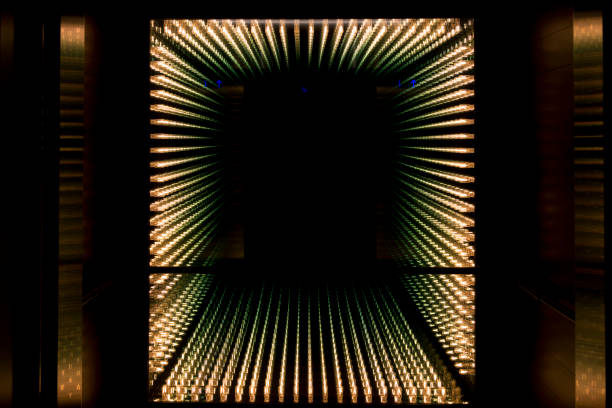
Is poetry a mirror or a lamp on the world?
If poetry is a mirror on the world, reflecting what is there, then it is surely a funhouse mirror, distorting what is there. Everything is bent, fragmented, stretched, and/or widened. Many free verse poets argued precisely this, that it would be their free verse poetry that would finally provide this mirror on the world, no longer distorted by rhythm and rhyme. The surrealists also made this claim. Who, now, would agree that the surrealists provided any kind of mirror?
If poetry is a lamp, lighting up the darkness in the world, then it is surely more a moon than a sun. (Ah, but the moon itself is reflective!--a kind of mirror of the sun, imperfect and dimmer.) While the Greeks considered Apollo, the sun god, to be the leader of the Muses, practically every other polytheistic mythological tradition considers the moon goddess to be the source of poetry. Poetry is thus considered to be a product of the moon--a dim light within the darkness, playing with the shadows, perhaps part of the shadows themselves, with the shadows moving, undulating, as the poem's light crosses the darkness, faintly uncovering what lies where people fear to look.
Orpheus descends into the underworld to retrieve his wife from death, but can only return with his poetry. There are many traditions of men descending into the underworld to retrieve something but are only able to return with the gift of poetry.
Plato, in the Allegory of the Cave, instead shows a man ascending out of the cave and into the sun, where he is enlightened. He then returns to the cave to bring the people knowledge of what he saw. He argues that most would reject the philosopher bringing the good news of the sunlight outside the cave. The philosopher thus comes closest to bringing a lamp--but in reality, he's attempting to bring the people to the lamp/sun, which requires persuasion. If you live in dimness and only view shadows, how could you believe in the light?
The poet, on the other hand, can bring the same information to the public without rejection. Why? Because the message is hidden under imagery, metaphor, and sound. The reader is first enchanted by these things, which creates the conditions for acceptance. Of course, this is hardly perfect. There have been plenty of persecuted poets in the world--burned at the stake, in its various metaphorical forms.
Plato wrote in dialogues in an attempt to bring the light of philosophy to the people in poetry. He felt the best poetry was that which was true, and which was trying to get people to see the truth. If this is your goal, remember that you have to do it under a veil.
Too many attempt to make their poetry either a lamp or a mirror. Didactic poetry, ham-handed political poetry--propaganda for a party and an ideology--are almost universally failures. The existence of the brilliant Langston Hughes hardly proves the opposite. Neither you nor I are Langston Hughes. And he had enough sense to write his poems by moonlight.
Having the right understanding of poetry will help you write better poems. For many of you, I am sure that you are already in this kind of lunar headspace and are thus proper lunatics. Some of you are perhaps a little (or a lot) prone to wanting to shine the sun on the world. Alas, such poetry doesn't last, as it mostly annoys readers, preaches to the choir for those who do like it, and really doesn't last. Instead, bring your truths to the world in imagery, metaphor, sound, fable, parables, mythology, and other forms of narrative. Afraid there will be many interpretations of your work? Then write essays. Everyone will bring their own perspectives to your poetry, when it's good, and if you're particularly good (and if you're particularly metamodern), you'll bring multiple perspectives to your reader within your poems themselves.
Monday, October 31, 2022
Against Self-Expression
If you search for images of "self-expression" on Google, you'll get a collage of photos that are going to look like this. I could think of no better way of showing exactly what I mean when I talk about--and criticize--self-expression.
The irony here is that in all of this so-called self-expression, the results are almost universally identical. It's all a miss-mash, with lots of color. What this suggests is that everyone's self-expression is like everyone else's self-expression. And what does that mean for either the self or it's expression? It means you're just like everyone else if this is what self-expression looks like. And that's precisely the problem with self-expression as art. It isn't art. It isn't even, as one of the pictures suggests, self-love. Love is always of a particular thing or person, and if there's anything this example of self-expression is not, it's particular.
With that kind of introduction, it's probably not surprising that I would say that perhaps the worst thing that ever happened to poetry was the emergence of the cult of self-expression. Although one can find this cult at play in the other arts, it seems to have hit poetry the hardest, and ruined several generations of poets.
Of course, the opposite end of this is the kind of academic poetry that is only produced in university English departments, only read by other academic poets, and only commented upon by academics trying to get scholarly papers published--a task made easier when one is dealing with "difficult" poetry.
Karl Popper once defined true artists as those who are attempting to work out artistic ideas and problems--which is to say, those related to myth, structures, traditions, etc., in light of changing social conditions in which the artists are working. It is an evolutionary process, and it always is in touch with what came before it.
Certainly, one could argue that contemporary academic poetry is doing precisely that. However, the avant-garde, as the academic poets fancy themselves to be, pride themselves in making radical breaks with the past. This is, of course, unlikely to be literally true, in much the same way that the surrealists never really allowed their "automatic writing" to go unaltered (a simple example: what are "automatic" line-breaks?).
The real problem with what I'm calling academic poetry is that it, much like academic art in general, is created after the "artist's statement" is created--even if it's created only in the artist's head. This is in part the fault of most of our artists having become academic artists because they first passed through university classes.
The funny thing, though, is that the undergrad poetry writing classes all tend to encourage "self-expression." The professors don't want you to stifle your self-expression by using form or any kind of constraint. In the meantime, many of them are writing poetry most of their students wouldn't understand. As the creative writers move into grad school, those who are writing more academic poetry tend to get more encouragement while the self-expression poets get left by the wayside.
One of the main problems with self-expression poetry--and the reason it gets left by the wayside, and why most such poets eventually stop writing--is that there is really only so much self to express. Most people are like most other people. And really, almost nobody has anything particularly interesting to say--and if you do have something interesting to say, it's likely going to be said in a few poems, a few short stories. And then, you'll be done.
While the academic poets do seemingly at least try to work out some kind of artistic problem, the problem they have is that they don't produce anything anyone wants to read. Not even the academics writing scholarly papers on today's academic art aren't interested in it. They just need to publish, and it's easier to publish something on a work that is contemporary and difficult and, therefore, hasn't been touched by anyone else, than it is to try to say something new about Shakespeare's sonnets, for example.
This would seem to put us in a quandary. If self-expression doesn't create lasting art or artists, and academic poetry isn't going to be read by anyone, when where does that leave us?
Fortunately, these are not the only options.
Another way forward is to first abandon self-expression as self-centered, narcissistic, and indulgent; then, we need to familiarize ourselves with the global traditions, become global classicists, and familiarize ourselves with the world's myths, poetic structures, and forms. We must keep in mind, though, that postmodern academic art is now part of that tradition. It was at least participating in the art of poetry in the Popperian sense, even if it sent itself into abject unpopularity due to the direction the poets went with it. However, to move forward, we have to bring things back to foundations, writing works that people would actually want to read, because they tap into the brain's love or rhythms, sounds/music, and archetypal imagery. Challenge, yes--but do so from a place of familiarity.
None of this is to say that you will no longer appear in your poetry. How is that even possible? Your poetry is necessarily going to reflect your world view, your attitudes, your fundamental beliefs, your passions, and so on. How can they not? Just don't make the mistake of either thinking that your art is all about you, and do not think your poetry is going to change the world because you're undermining capitalism by subverting grammar or some such nonsense. You're not. That's not how poetry works. Its power is elsewhere.
Remember, the Muses are the daughters of memory and inspiration, of what your brain retained of external knowledge, and the way your brain unconsciously processed that knowledge through your emotions. The "you," the "self" that is being expressed is in that unconscious processing leading to inspiration. It's not vomiting your emotions onto the page. Indeed, self-expression is the subversion of poetry to your emotions, ideas, and thoughts rather than entering into a dialogue with the world's other poets, and your audience. You have to love the art enough that you want to serve it rather than make it serve you. And that means entering into the global history of poetry, bringing not just yourself, but your contemporary society, culture, and knowledge with you.
Monday, October 3, 2022
Parrot Literary Corner - EP08 - Poetry and the World of Troy Camplin
Here I am interviewed by Parrot Literary Corner, where you can get a bit of my philosophy of poetry.
Monday, August 15, 2022
Inspiration and Knowledge
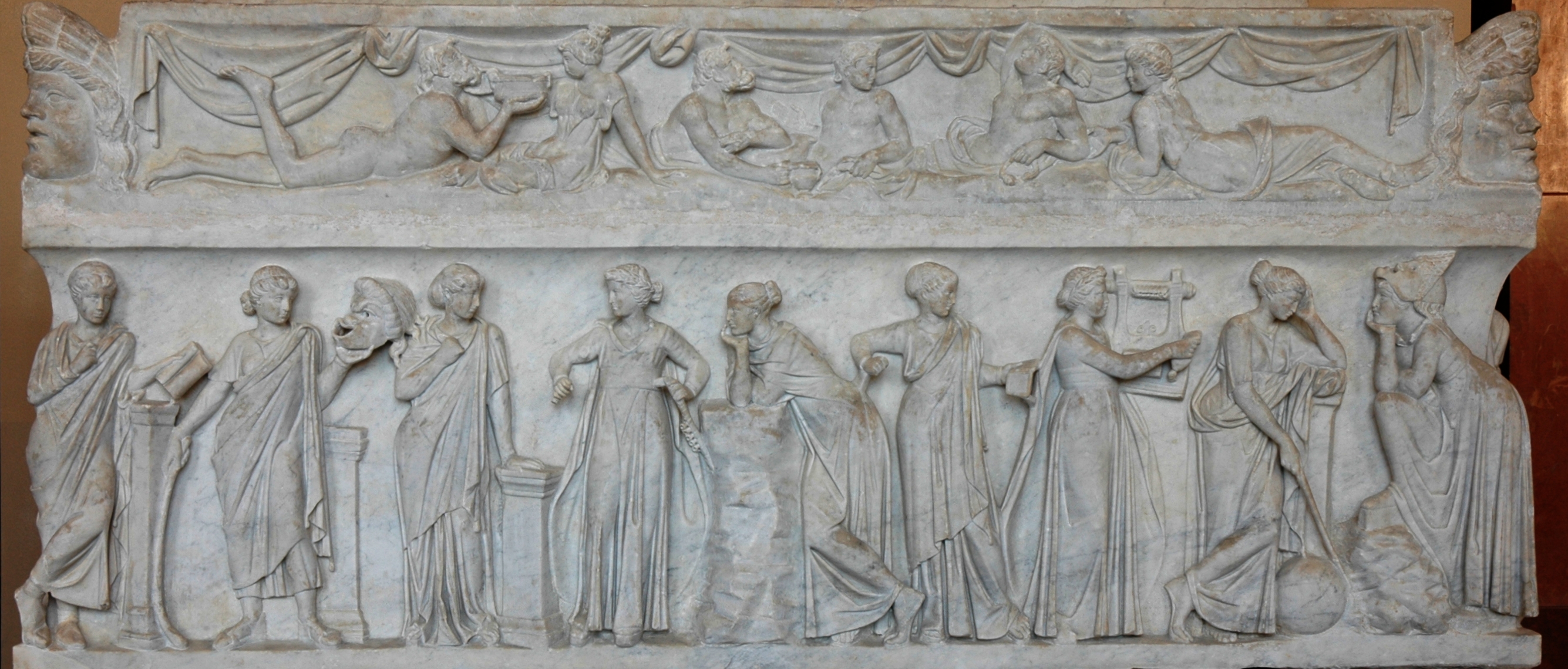
The Greeks believed that the Muses were the offspring of Zeus (God) and Memneke (Memory). One way of understanding this insight is that poets produce their art due to a combination of inspiration and memory.
In other words, we have to have some kind of knowledge in order to create good poems. You cannot be an ignorant poet. Indeed, one could argue that there is no such thing as a great poet who is ignorant. Think about the great poets. Goethe was a scientist who studied the physics of light and biology, a bureaucrat who helped manage a princedom, a well-read writer, and a traveler. He studied languages and history, read philosophers and ancient writers. Shakespeare demonstrated his knowledge of the Trivium, of history, of philosophy, and of the literatures of other cultures in his works. Keats was a doctor, as was Chekov. The point is that these were educated people.
The poet must be an educated person. Not just educated in a narrow sense--having a B.A. in English, a M.A. in English, and a Ph.D. in English is being educated in a narrow sense--but in as broad and universal a sense as possible. There are English-major Marxists, English-major Freudians and Jungians, and English-major theorists; unfortunately, actual economists, psychologists, and philosophers barely recognize the English-major versions of their fields.
This is not to denigrate English as a degree. I do, after all, have a major in English, a Master's in English, and a Ph.D. in the Humanities that focused on creative writing and literary studies, and I learned a great deal from my literary theory classes--and I took as many literary theory classes as I could, because I enjoyed them so much. However, I did also major in biology and minor in chemistry, I do have two years of graduate classes in molecular biology, and I taught myself enough economics, psychology, and sociology to have peer-reviewed publications in those fields. I have studied mythology on my own and to get my Humanities degree. I truly believe in the synthesis of science and the humanities, that there shouldn't be "two cultures." I don't know if any of this makes me a great poet, but it certainly means I have a great many things in memory.
This knowledge of course has to include thousands of poems, as well as novels, short stories, and plays. There is no such thing--anywhere at any time--as a poet who is anything less than mediocre who isn't well-read. This "reading" includes oral traditions, including songwriters who are inspired/influenced by other songwriters. There's no such thing as a writer who wasn't a prolific reader. The two go hand-in-hand.
But knowledge and ideas are not enough. We also need inspiration.
The word "inspiration" literally means "breathe in." However, in many languages, the word for soul or spirit is "breath." To have inspiration is thus to have a spirit within you. You may call that spirit God, or you may call it, along with Socrates, a "daimon," but whatever it may be, it feels like it's coming from somewhere other than yourself. It's certainly coming from somewhere other than your conscious self. If you feel inspired, there is a kind of sudden insight that makes you want to write (or paint, or make music, etc.).
If you prefer a less mythical/mystical version of inspiration, there's also a psychological one. Our minds are often working on problems in the background, then feed the finished solution to our conscious minds all at once, in what we call "a flash of insight." This can happen with scientists--Einstein being a famous case, with his insight about relativity coming to him in a dream--and it can certainly happen with poets.
With poets, though, inspiration is more of a learning something that is of personal importance to us. That is, it's a kind of subjective knowledge. When we communicate what we have learned in verse, we express poetic truth. How well we communicate that truth depends upon our skills as poets.
When you communicate your subjective understanding, you add to the wealth of human knowledge. We need your insight, your understanding, your interpretation of things--and we need you to write so well someone will read it, so it actually becomes part of human knowledge by becoming a part of your reader and how your reader ever after thinks. And that means writing something people can and will remember.
At the same time, if you are only relying on inspiration, you may write a few dozen poems in your life, none of them any good. As we've already seen, there's more to writing poetry.
Subscribe to:
Posts (Atom)
-
If you were to come across a ten-syllable lined poem, you would probably expect it to be iambic pentameter. And you would probably be right...
-
Abduction, by Jesse Mockrin Here, at last, is the promised post on metamodern poetry --or, at least, what I think metamodern poetry is and ...
-
* Verse is metered language. What, though, is meter? "Meter" comes from the Ancient Greek "metron," meaning "measu...

