Showing posts with label poetry. Show all posts

Monday, November 14, 2022

A Mirror or a Lamp?

853 Infinity Mirror Stock Photos, Pictures & Royalty-Free Images - iStock

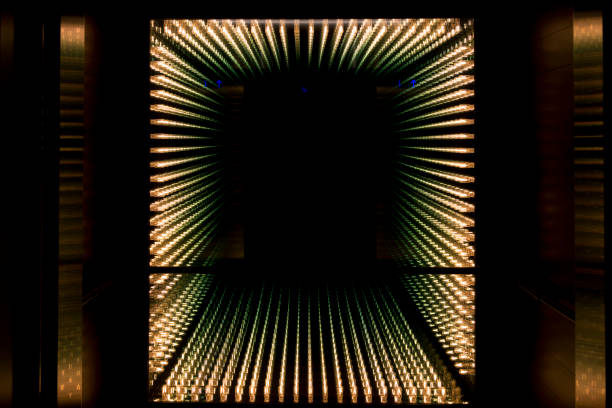
Is poetry a mirror or a lamp on the world? 

If poetry is a mirror on the world, reflecting what is there, then it is surely a funhouse mirror, distorting what is there. Everything is bent, fragmented, stretched, and/or widened.  Many free verse poets argued precisely this, that it would be their free verse poetry that would finally provide this mirror on the world, no longer distorted by rhythm and rhyme. The surrealists also made this claim. Who, now, would agree that the surrealists provided any kind of mirror?

If poetry is a lamp, lighting up the darkness in the world, then it is surely more a moon than a sun. (Ah, but the moon itself is reflective!--a kind of mirror of the sun, imperfect and dimmer.) While the Greeks considered Apollo, the sun god, to be the leader of the Muses, practically every other polytheistic mythological tradition considers the moon goddess to be the source of poetry. Poetry is thus considered to be a product of the moon--a dim light within the darkness, playing with the shadows, perhaps part of the shadows themselves, with the shadows moving, undulating, as the poem's light crosses the darkness, faintly uncovering what lies where people fear to look. 

Orpheus descends into the underworld to retrieve his wife from death, but can only return with his poetry. There are many traditions of men descending into the underworld to retrieve something but are only able to return with the gift of poetry. 

Plato, in the Allegory of the Cave, instead shows a man ascending out of the cave and into the sun, where he is enlightened. He then returns to the cave to bring the people knowledge of what he saw. He argues that most would reject the philosopher bringing the good news of the sunlight outside the cave. The philosopher thus comes closest to bringing a lamp--but in reality, he's attempting to bring the people to the lamp/sun, which requires persuasion. If you live in dimness and only view shadows, how could you believe in the light?

The poet, on the other hand, can bring the same information to the public without rejection. Why? Because the message is hidden under imagery, metaphor, and sound. The reader is first enchanted by these things, which creates the conditions for acceptance. Of course, this is hardly perfect. There have been plenty of persecuted poets in the world--burned at the stake, in its various metaphorical forms. 

Plato wrote in dialogues in an attempt to bring the light of philosophy to the people in poetry. He felt the best poetry was that which was true, and which was trying to get people to see the truth. If this is your goal, remember that you have to do it under a veil.

Too many attempt to make their poetry either a lamp or a mirror. Didactic poetry, ham-handed political poetry--propaganda for a party and an ideology--are almost universally failures. The existence of the brilliant Langston Hughes hardly proves the opposite. Neither you nor I are Langston Hughes. And he had enough sense to write his poems by moonlight. 

Having the right understanding of poetry will help you write better poems. For many of you, I am sure that you are already in this kind of lunar headspace and are thus proper lunatics. Some of you are perhaps a little (or a lot) prone to wanting to shine the sun on the world. Alas, such poetry doesn't last, as it mostly annoys readers, preaches to the choir for those who do like it, and really doesn't last. Instead, bring your truths to the world in imagery, metaphor, sound, fable, parables, mythology, and other forms of narrative. Afraid there will be many interpretations of your work? Then write essays. Everyone will bring their own perspectives to your poetry, when it's good, and if you're particularly good (and if you're particularly metamodern), you'll bring multiple perspectives to your reader within your poems themselves. 

Monday, October 31, 2022

Against Self-Expression

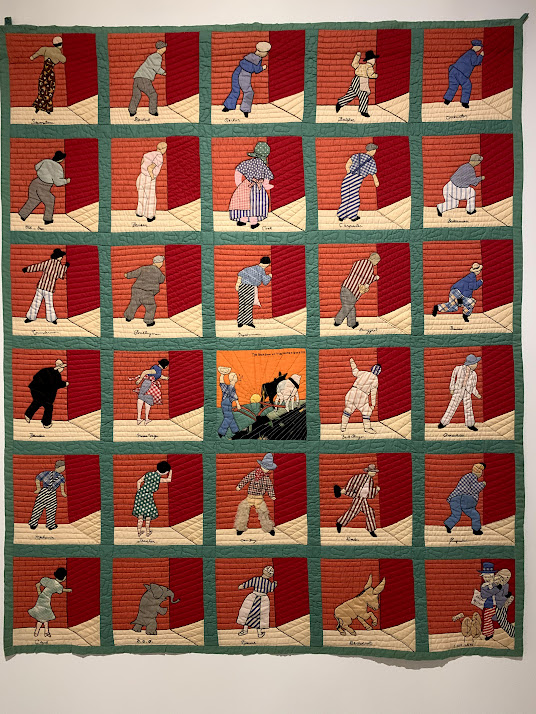
If you search for images of "self-expression" on Google, you'll get a collage of photos that are going to look like this. I could think of no better way of showing exactly what I mean when I talk about--and criticize--self-expression. 

The irony here is that in all of this so-called self-expression, the results are almost universally identical. It's all a miss-mash, with lots of color. What this suggests is that everyone's self-expression is like everyone else's self-expression. And what does that mean for either the self or it's expression? It means you're just like everyone else if this is what self-expression looks like. And that's precisely the problem with self-expression as art. It isn't art. It isn't even, as one of the pictures suggests, self-love. Love is always of a particular thing or person, and if there's anything this example of self-expression is not, it's particular. 

 With that kind of introduction, it's probably not surprising that I would say that perhaps the worst thing that ever happened to poetry was the emergence of the cult of self-expression. Although one can find this cult at play in the other arts, it seems to have hit poetry the hardest, and ruined several generations of poets. 

Of course, the opposite end of this is the kind of academic poetry that is only produced in university English departments, only read by other academic poets, and only commented upon by academics trying to get scholarly papers published--a task made easier when one is dealing with "difficult" poetry. 

Karl Popper once defined true artists as those who are attempting to work out artistic ideas and problems--which is to say, those related to myth, structures, traditions, etc., in light of changing social conditions in which the artists are working. It is an evolutionary process, and it always is in touch with what came before it. 

Certainly, one could argue that contemporary academic poetry is doing precisely that. However, the avant-garde, as the academic poets fancy themselves to be, pride themselves in making radical breaks with the past. This is, of course, unlikely to be literally true, in much the same way that the surrealists never really allowed their "automatic writing" to go unaltered (a simple example: what are "automatic" line-breaks?). 

The real problem with what I'm calling academic poetry is that it, much like academic art in general, is created after the "artist's statement" is created--even if it's created only in the artist's head. This is in part the fault of most of our artists having become academic artists because they first passed through university classes. 

The funny thing, though, is that the undergrad poetry writing classes all tend to encourage "self-expression." The professors don't want you to stifle your self-expression by using form or any kind of constraint. In the meantime, many of them are writing poetry most of their students wouldn't understand. As the creative writers move into grad school, those who are writing more academic poetry tend to get more encouragement while the self-expression poets get left by the wayside. 

One of the main problems with self-expression poetry--and the reason it gets left by the wayside, and why most such poets eventually stop writing--is that there is really only so much self to express. Most people are like most other people. And really, almost nobody has anything particularly interesting to say--and if you do have something interesting to say, it's likely going to be said in a few poems, a few short stories. And then, you'll be done. 

While the academic poets do seemingly at least try to work out some kind of artistic problem, the problem they have is that they don't produce anything anyone wants to read. Not even the academics writing scholarly papers on today's academic art aren't interested in it. They just need to publish, and it's easier to publish something on a work that is contemporary and difficult and, therefore, hasn't been touched by anyone else, than it is to try to say something new about Shakespeare's sonnets, for example. 

This would seem to put us in a quandary. If self-expression doesn't create lasting art or artists, and academic poetry isn't going to be read by anyone, when where does that leave us? 

Fortunately, these are not the only options.

Another way forward is to first abandon self-expression as self-centered, narcissistic, and indulgent; then, we need to familiarize ourselves with the global traditions, become global classicists, and familiarize ourselves with the world's myths, poetic structures, and forms. We must keep in mind, though, that postmodern academic art is now part of that tradition. It was at least participating in the art of poetry in the Popperian sense, even if it sent itself into abject unpopularity due to the direction the poets went with it. However, to move forward, we have to bring things back to foundations, writing works that people would actually want to read, because they tap into the brain's love or rhythms, sounds/music, and archetypal imagery. Challenge, yes--but do so from a place of familiarity. 

None of this is to say that you will no longer appear in your poetry. How is that even possible? Your poetry is necessarily going to reflect your world view, your attitudes, your fundamental beliefs, your passions, and so on. How can they not? Just don't make the mistake of either thinking that your art is all about you, and do not think your poetry is going to change the world because you're undermining capitalism by subverting grammar or some such nonsense. You're not. That's not how poetry works. Its power is elsewhere. 

Remember, the Muses are the daughters of memory and inspiration, of what your brain retained of external knowledge, and the way your brain unconsciously processed that knowledge through your emotions. The "you," the "self" that is being expressed is in that unconscious processing leading to inspiration. It's not vomiting your emotions onto the page. Indeed, self-expression is the subversion of poetry to your emotions, ideas, and thoughts rather than entering into a dialogue with the world's other poets, and your audience. You have  to love the art enough that you want to serve it rather than make it serve you. And that means entering into the global history of poetry, bringing not just yourself, but your contemporary society, culture, and knowledge with you.

Monday, October 17, 2022

Defining the Undefined We Know

Biography - Bob Dylan Center | Tulsa, OK 

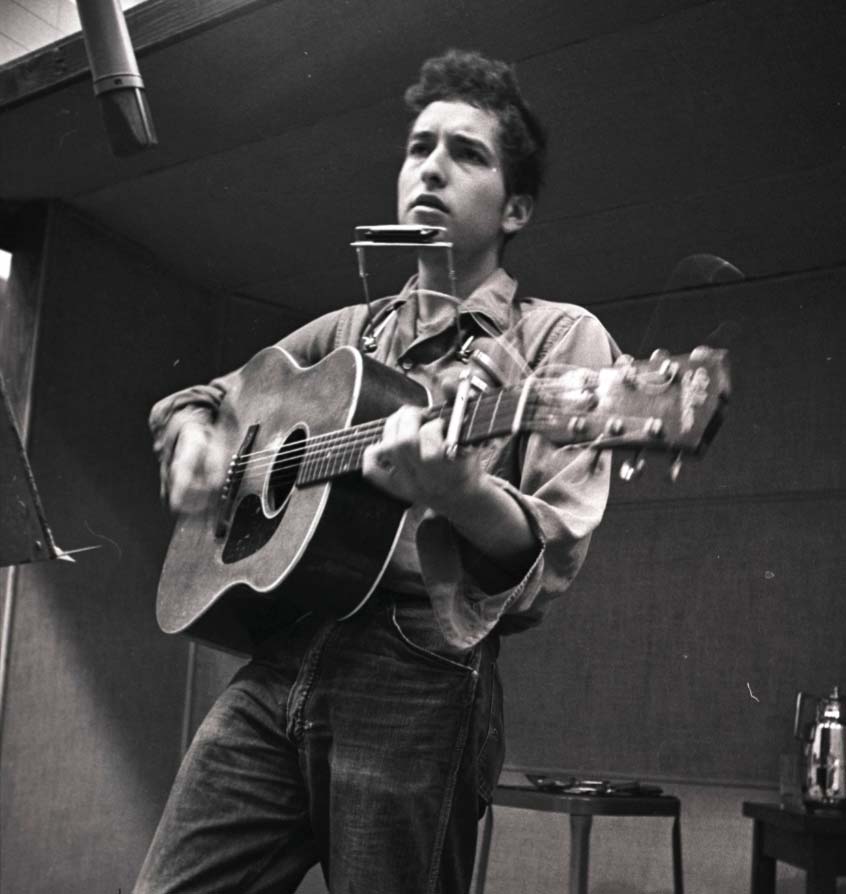
We forget that poetry had its origin in song. The Iliad and The Odyssey were sung (can you imagine memorizing those songs?). The Greek tragedies were sung. So rock music, blues, etc. are much more originary in their poetry than what we now consider to be poetry is. 

Unless you understand what poetry is and its history, nobody should take you seriously as a poet -- least of all yourself. In the same way that if you can't draw a picture of something someone could clearly and obviously recognize, you're not an artist no matter how much paint you fling around, if you can't write a sonnet or some Sapphic verse, you're not a poet. Artists have to know the history of their art if they're ever going to be worth anything. Even such Modern poets like Ezra Pound, who famously said, "make it new," understood that. So has any poet that has ever lasted. Walt Whitman didn't write free verse because he couldn't write a sonnet (which seems to be the case with too many poets these days), but rather he wrote in free verse because, having mastered the forms, he wanted to push poetry into new territory. As an artist, if you don't know where you came from, you are lost. The fact that poetry has its origin in song is vital to understanding poetry at all and thus to making poetry worth reading. In the same way, it's important to understand that your egg came from a chicken if your plan is to make more chickens. But it doesn't matter what animal an egg comes from if you're going to mess it up, break it down, and chew it up -- the end result is crap. I still prefer chicken eggs, though.

So, what is poetry? How can we identify it? Can we talk about its essence? You should at least have read a sufficient amount of what has been identified as poetry -- both past and present -- to have created some sort of concept, even if you can't create a scientifically acceptable definition of poetry. How else will you be able to tell the difference between poetry and prose? I've read poetic prose and read prose broken up into lines. If you can't sing it or dance to it, it's probably not poetry. A lot of prose has been mistakenly called poetry -- but if we call everything poetry, then poetry indeed has no meaning or definition.

The issue of definitions goes back to Socrates (and likely before). Remember that Socrates was always asking experts to define the thing they were expert in. Every time he would do so, he would find them giving him examples of, say, justice or piety or love, but they could never define the thing itself, which Plato developed into a theory that such Ideas or Forms were external to the world, which was just a poor set of shadows of the real. Nietzsche observed that we create ideas or concepts by looking at a set of unidentical similar objects and subtracting away the dissimilarities. Wittgenstein observed that this results in objects being able to be conceived and reconceived due to "family resemblances." A shoe is not a hammer, but it can be used as a hammer, so when you reconceive of a shoe as a hammer, you are saying it has a family resemblance to hammers.

All of this is to say that if we are trying to come up with the Platonic Form of poetry, we will never succeed, since such a form does not exist. However, we should be able to look at a sufficient number of poems and be able to work out their family resemblances. Along those lines, whatever your definition of poetry is is going to be a good start. Can we add to it? Subtract from it? The use of tradition as a criteria (I think one should have that as a criteria in the arts) suggests that we should put quite a bit of weight on past "verbal happenings." If we look at poetry around the world, such works have repeated structures (whether rhythm, rhymes, parallelism, etc.) and are broken up into lines that take optimally 3 seconds to speak -- not coincidentally, our short term memory works best in 3 second chunks. These are typical, but are they necessary?

Let's also return to the issue of song and poetry. There is no question that poetry began as song -- but there is equally no question that there was a bifurcation, resulting in the two traveling down somewhat different (though periodically intersecting) paths. Where does one draw the line? Many poems can be sung -- does that make them songs? I have sung my daughter's Dr. Seuss books to her (had to throw some variety in, since I read her the same books every single day), but I don't think Dr. Seuss intended his books to be sung. I suppose we could look at songs as "low art" vs. the "high art" of poetry -- especially modernist and postmodernist poetry, which is read (and sometimes enjoyed) almost exclusively by overeducated people like me -- but I don't like such distinctions, as it creates an unnecessary bifurcation in the art. A great work of art is one where anyone can enjoy it, but the more you know, the more you appreciate the work, one where repeated readings/viewings/listenings result in your coming to understand the work more and more. Perhaps by reconsidering song as poetry and consciously including it in the tradition, we will come to a better understanding of what poetry is, and become better poets ourselves.

Monday, October 3, 2022

Monday, August 29, 2022

Patterns and Poetry

*

"All art [is] cognitive play with pattern"--Brian Boyd, Why Lyrics Last, pg. 5

Rhythm and pattern are fundamental to understanding and finding meaning in the world. Rhythms and patterns are examples of a particular rule found at every scale of nature. Both involve repetitions of either objects (which would include grammatical structures and syntax) or sounds (such as rhymes and regular rhythms such as iambic). Poetry that has rhythms and patterns are thus participating in and adding to nature as nature itself expresses itself.

In Aeon Magazine there is a fascinating article on repetition and music. In it the author notes that people consider repeated sounds as more musical. More, repeated words become more like songs.  And by extension, more like poetry. 

What this implies, then, is that Fred Turner is right about poetry in, well, everything he has written about poetry. Poetry is repetition. It is repeated sounds, repeated rhythms, repeated words, repeated structures. This would also explain why some forms of poetry involve repeated lines. 

Sonnets, for example, have repeated sounds in the end rhymes and in the iambic pentameter rhythms.

With ghazals there is the repetition of the end phrase.

Then there is the villanelle, in which we have entire lines repeated. 

But if we take a poem like my poem In the Multiverse, one may wonder how it is any different from prose simply cut up into lines:

In the Multiverse

If there are really many universes,
As many physicists now claim, if there
Are infinite universes out there–
Then I exist an infinite number
Of times and places, and so do my wife
And baby daughter. In some, sadly, I
Do not exist; in some, my wife and I,
We never met. And that’s the tragedy.
But out there too my mother also lives
And, living, knows and loves my daughter who,
In my own universe, she’s never seen
–
And, knowing that, I think on it with joy.

Well, first, the poem is in iambic pentameter, so there is that level of repetition. But it is in blank verse, so sound repetition seems gone. But note that there are in fact several repetitions of sentence patterns:

"If there are..." is repeated. "In some," is repeated. "And, [progressive verb]," is repeated. As we've discussed before, parallelism such as this is a kind of repetition, and is not uncommon in poetry--see for example the Psalms. 

But is non-repetitive poetry even possible? If not, what do we make of the works out there called poetry but do not have repetition? Are they merely prose with line breaks? 

The writer who wants to successfully move his audience is one who will use repetition. If you want to make memorable works, you have to use repetition. If you want your work--poem, prose, play--to embed itself in the minds of your readers, you have to use repetition. With repetition, your reader, viewer, listener will go away with you forever in their minds. The more repetitions (without being overbearing), the more patterns and rhythms, the more memorable overall.

Patterns are spatially organized. They are arrangements of forms and/or colors, which is to say, they are designs. In literature, they create meaning and motif. They are imitations or copies, which comes from the etymology of “pattern,” derived from the Old French, patron, since a client would copy his patron, since the patron provided a model for the client to follow–the patron would act as the ideal, example, exemplar. Thus there a connection between patterns and ethics, and between beauty and ethics, since patterns are part of beauty. 

Rhythms, from the Greek rhein, to flow, are temporally organized. Rhythms are regular repetitions over time, typically of sound. Nonetheless, there is a connection to pattern: in a work of art, a rhythm holds the parts together to create a harmonious whole through the repetition of form and/or color. Since rhyme come from the Greek rhythmós, we see that rhyme is a kind of rhythm. There is also an ethical component to rhythm, since a rhythm in biology is a pattern of involuntary behavior or action that occurs regularly and periodically. 

In the realm of behavior, rhythms are involuntary actions, whereas patterns are consciously followed. A rhythm is meant to carry us along, to help our actions flow, while patterns help create meaning by making us more conscious. In this formulation, one could see rhythm as Dionysian, or (to use Milan Kundera’s terms) Demonic, while patterns would be Apollonian, or Angelic. A tragic work of art, using Nietzsche’s formulation, would be one that contains both rhythm and pattern.

Brian Boyd, in his book Why Lyrics Last, argued that we have an "innate attraction to information that we can see as patterned, since if we recognize patters we can process information rapidly, in real time" (5). He also argues that there is a "hyperconcentration of pattern in pure lyric" (5), by which he means the regular rhythms, rhymes, etc. typically found in formalist verse. However, there are other patterns which can emerge when we have stories. If the story is long enough, such as a novel, we can end up with very complex patterns--fractal patterns--of theme words, as I demonstrated in my dissertation (the relevant chapter of which you can find and read here). 

Stories make poems easier for the reader to engage with the poem because narrative structure is the pattern we live and think by. This isn't to say that lyric poems ought to have what we typically think of as a standard story structure, but certainly if you have some sort of story in mind, the reader will fill in the blanks and make the implied story their own. This also suggests that storytelling shouldn't be shunned in poetry--nor, I would argue, should poetry be shunned in storytelling. The patterns which storytelling create are complex, and they will complexify your poems, just as making stories poems (including plays, in verse) will also complexify and make more memorable your stories. 

Boyd, again, points out that patterns are vital elements to the arts, and that storytelling in particular provides complex patterns to the reader:

We incrementally fine-tune our neural wiring through our repeated and focused engagement in each of the arts. Fiction in particular, by harnessing the advanced power of human social cognition, our ability and inclination to track actions, intentions, and thoughts of others, also expands our imaginations so that we can make sustained forays into possibility space. (11)

In other words, "human art refines our performance in our key perceptual and cognitive modes, in sight (the visual arts), sound (music), and social cognition (story)" (11). 

Combining the patterns of rhythmic lines, rhymes, sound repetitions, word repetitions, and storytelling create a set of patterns within patterns The creation of patterns within patterns creates fractal depth, and unity among diversity, as found in nature. And as the brain is part of nature, in art too. Nature has fractal geometry–the repetitious repetition of repetitions. Great works of art have fractal geometry too, in the same way that nature is fractal, not in the repetition of the same fractals, but of the superposition of different fractal geometries on top of each other. Again, uniformity in variety. We again see the use of repetition, of patterns, and therefore, of rhythm, at the most basic levels of nature. And it goes all the way down. 

Light is made of waves – they are repetitious and have a steady rhythm. Quantum particles (including quantum strings) all vibrate–they have steady rhythms (this quality of vibrating at a steady rhythm is why we use Cesium–which vibrates at a known, constant rate–in our atomic clocks). Crystals all have patterns, planets all orbit in steady rhythms (as do stars in the galaxy). That is, nature is rhythmical, patterned, all the way down. It has fractal depth. So we should not be surprised to find the use of rhythm in the development of biological organisms, including humans–and our brains. 

Nor should we be surprised we find rhythms and patterns comforting–and beautiful. This suggests we would expect our art to be patterned, rhythmical, since both the creator and the audience finds patterned, rhythmic art beautiful. At the same time, one cannot have just regular patterns repeating over and over and over and over and over again. Violation of patterns is also important. It catches your attention. It is meaningful to the reader/viewer. It prevents the reader from getting board. 

Imagine a regular rhythm of grasses as a breeze blows across the savanna. It's calming, soothing. A little boring, but that's ok. Then, you notice a disruption in that regular pattern. Now you're paying attention, you're on alert. What could that be? What could it mean? Is there an enemy approaching? A lion? You focus on the disruption in the regular pattern, at the new pattern which is emerging. 

Regular patterns, then, have the danger of making the reader board. That's why it's important to introduce irregularities and complex patterns. It draws the attention. 

This same problem of boredom keeps artists innovating, creating new patterns, suggesting new rhythms that can potentially help us to see new things in the world, helping us to better adapt to and learn about the world. That is the true power of patterns. It's not just in their regularity, but in their irregularities as well. 
Monday, July 25, 2022

Rhyme Schemes


Rhyme is the repetition of sounds. As previously noted, alliteration is a form of rhyme. However, when most people think of rhyme, they think of end rhyme. While end rhyme has fallen out of favor in poetry, it's never fallen out of favor in songs, and it's an absolutely vital element of rap. In fact, a well-known term for rap battles and freestyle rapping is "dropping rhymes." 

If we're to be honest, the only place where rhyme has lost favor is among academics who study poetry. Your average person loves rhyme. That's why songs and rap continue to be full of rhymes. 

For a rhyme to be an end rhyme, it not only has to be found at the end of a line (which is, after all, why it's called an end rhyme), but it has to rhyme on the stressed syllable. If it only rhymes on the stressed syllable, it's called a masculine rhyme; if it rhymes using both the stressed and a following unstressed syllable, it's called a feminine rhyme. 

  • Masculine -- thick / quick
  • Feminine -- thickly / quickly

Of course, one can get really playful with one's rhyme and have three or even four syllables rhyming. 

However, there are a few "rhymes" that aren't actually rhymes. For example, stick and stick don't rhyme. They don't rhyme because they are the same word. A word rhymes only if it has part of the same sound(s), not if it is literally the same word in sound. Also, a stressed syllable doesn't rhyme with an unstressed syllable. The word three doesn't rhyme with quickly, for example. 

There are many kind of rhyming patterns (or schemes) you can use. We use letters to designate pattern. For example, if you have a ABAB rhyme pattern, the first line has to rhyme with the third line, and the second line has to rhyme with the fourth. 

Here are some popular rhyme schemes:

  • Couplets -- AA
  • Triplets -- AAA
  • Alternate rhyme -- ABAB
  • Enclosed rhyme -- ABBA
  • Simple four-lined rhyme -- ABCB

In addition to these would be the mono rhyme, where each line has the same rhyme.

Of course, there are also different forms that rely on very specific rhyme schemes, such as the Petrarchan sonnet, the Shakespearean sonnet, the villanelle, the terza rima, the ballade, the ruba'i, and the limerick, among others. 

While I'll be talking about both kinds of sonnets, the villanelle, the ballade, and the limerick later, because they have other features beyond rhyme, I will note that the terza rima and the ruba'i are primarily just particular rhyme schemes:

terza rima -- ABA BCB CDC DED EFE FGF

ruba'i -- AABA

Note that the terza rima is a particular rhyme scheme because it is interlocking. The central end word becomes the first and third rhymes of the next triplet. Thus, the poem is partly driven by the interlocking rhymes. 

The ruba'i can either stand as a single quatrain poem, be a series of similar quatrains, or be interlocking as well--AABA BBCB CCDC, etc. When it's a series, it's called a rubaiyat.

One of the interesting things about using end rhymes is that, because you are forced to fit the rhyme, you are oftentimes forced to find something more interesting than what we originally came up with. Sometimes, it can send the poem into unexpected directions. A lot of people don't like this, because they want to feel like they are in complete control over the work. But that's the wrong attitude to have when it comes to writing poetry. 

Rhyme allows you to both create the expected--the rhyme--with the unexpected in the question of what particular word will rhyme. And when it forces you, as a writer, to do somewhere other than where you thought you'd be going, it results in a combination of the expected and the unexpected in the very themes and topic of the poem. Anytime you can create a balance between the expected and the unexpected, you're going to be writing a better work than if it was all completely expected (boring) or completely unexpected (confusing). 

Rhyme is one of those constraints that can make your poem more interesting and artistic. 


Monday, July 18, 2022

The Power of Limits

*

 I took the title of this lesson from the above book. The author of The Power of Limits argues that nature is full of constraints that create particular kinds of patterns. He points out that the existence of these constraints does not at all prevent there from being a huge variety of things, but in fact is necessary for there to be variety. 

We like to think that freedom means lack of constraints. There are, of course, constraints that reduce freedom, but there are there constraints that increase it. People often misunderstand what "freedom" means, thinking it means that anything at all goes, and if you aren't free from constraints, you aren't free at all. This thinking is what lies behind opposition to the ideas of there being a biological human nature, or of there being cultural universals. 

But if you think about it, we have plenty of evidence that constraints aren't reducing freedom, particularly freedom of expression. The fact that religion is a cultural universal doesn't make people less expressive--it makes us more expressive. It's one more element in human cultures, and it adds to the variety of ways humans can express themselves, understand the cosmos, and be human. 

Does the fact that languages are constrained by grammar and syntax in any way prevent us from expressing ourselves, or running out of not only things to say, but ways to say them? Absolutely not. 

The same is true of literature. 

The use of constraints in poetry--whether they be the use of alliteration, end-rhyme, assonance, consonance, rhyme schemes, formalism, parallelism, or any number of other poetic tropes I'll be discussing--actually gives us more ways of saying things, and often new ways of saying things and thinking them. 

If we have to hit the rhyme at the end of the line, we have to think about how to get there. If the thing we were planning to write won't work to get a rhyme, we have to rework that line--or, we have to rework the previous line to get a word that rhymes better or easier, which will then cause us to have to rethink the next line anyway--and then, before you know it, you have something you didn't expect to have written. New ideas, new thoughts emerge. And if you're surprised, you can certainly expect your reader to be.

Art isn't supposed to be easy. The word "art" comes from "artisan," meaning a craftsman. You are supposed to be crafting your art. We are working in constraints as it is--the constraints of grammar and syntax, for example (though poets can challenge these, they can only challenge them within their pre-existing constraints)--and the addition of more only makes us have to pay more and more attention to what we are doing. In an odd way, by making us focus more, by making us not write on automatic pilot, the kinds of constraints one finds in, say, a sonnet can actually make you more in control of your work. 

If you spread gasoline around on the ground and light it, you'll get a quick conflagration, and then it will go out. If, however, you build an engine, you will still light gasoline, but that gasoline will now be directed into useful work. You can do many more things with an engine than you can with a conflagration. One you can burn grass and trees with; the other you can use to create cars and tractors and airplanes and factories. Constraints like poetic forms are like engines. With them, you can do a great many things--a great many more things than you can do with standard, non-poetic prose. 

Saturday, July 9, 2022

Rhythm and the Brain

What goes up must come down: The science of brain rhythms | Donders Wonders 

Rhythm is a kind of constraint that is very natural to human beings, because they are a part of nature itself. 

Rhythms are a kind of pattern--a pattern that takes place in time. Waves breaking on the shore have rhythms. Bird songs have rhythms. Your heart beats to a rhythm. 

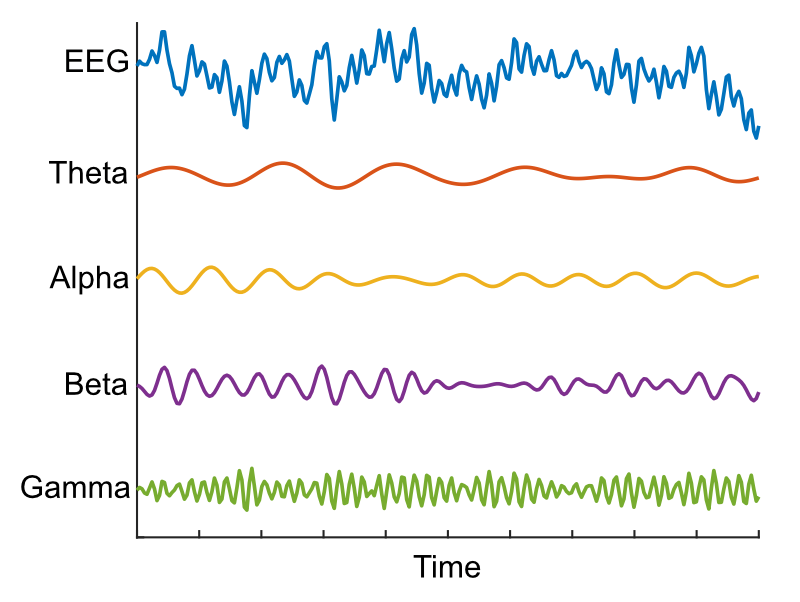
The brain, too, is full of rhythms--complex rhythms, brain waves, and so on. So, it should be no surprise that we humans are attracted to rhythms and make rhythms. Humans make music with rhythms. Birds are born with their songs, and we are now learning that many can learn new songs and modify old songs. Humans too, seem to be born with a musical sense, only we not only sing (some of us quite poorly), but externalize those rhythms into musical instruments we create. 

When you apply music to words, you get songs and rhythmic poetry. Good songs and poetry combine simple patterns, such as iambic, with more complex patterns, such as the occasional violation of the regular pattern, the subtle differences in lilt, word and syllable length, and stops and pauses due to punctuation and the presence of a cesura (a pause, either naturally placed there by the writer and reader as they read the line, or literally placed there with a space by the poet). 

The combination of regular rhythm and more complex rhythms prevent the poem from becoming too blandly repetitive, and it feels/sounds more beautiful. 

As mentioned above, the brain is rhythmic. It is why we are attracted to rhythms, and why we create rhythms--particularly when we make art. More, the rhythms of poetry and other rhythmic art coordinate the brain's rhythms, making the brain's rhythms match those of the poem, for example. Of course, those rhythms were made by another person, by another brain, so when your brain matches the work's rhythms, your brain is creating similar patterns as those of the artist when the artist was creating. 

Rhythms thus bring us together as people. Drums make us dance together in rhythms and rituals. We get together at concerts to unify in rhythms. A rhythmic speaker is more compelling and will get a group of people to act together. 

There is no mistaking the power of rhythms. Which is why it's a vital element for the most artistic of speech acts: poetry. 


Friday, July 8, 2022

What Is Missing--The Lipogram

Gadsby (novel) - Wikipedia

(Note: links with a star next to them will take you to Amazon pages where you can buy the books in question.)

A lipogram is a kind of rule-based writing in which the author does not use a particular letter. Most of the world's poetry is written using constraints--such as particular rhythms, rhyme schemes, etc.--and this is simply one of the poetic tools you can use. 

 Whenever I have taught writing, I have always given an assignment in which the students were to write a one-page essay without using any words that contain the letter E. This assignment was always met with disbelief that it could even be done. I assured them that it could.

Why would I assign my students to do a lipogram? 

One of the benefits of such an exercise is that it forces you to slow down and think about each and every word you're using. Many writing problems are simply a result of being fast and sloppy. We are used to our language, and too often we think because we have spoken it almost all our lives, that we are masters of it. In a sense, we are, but if that were transferable, we wouldn't have so many people writing so many ungrammatical sentences--sentences they would never speak, as they simply could not speak them, they are so unnatural. 

That may seem an odd situation, but that is perhaps a topic for another post. I'll simply say that while acquiring speech is automatic and natural, writing is a technology that must be actively taught. 

Trying to write an essay without using words containing the letter E is a fun exercise. But imagine trying to write a short story without them. Or try a novel. Impossible? Tell that to Ernest Vincent Wright, author of Gadsby*, and to George Perec, author of A Void (Versa Mundi)*. Me, I simply tried to do it with a poem:

I am a lion, a high-soaring bird,
I'm coiling and hissing a softly hot word.
I am a spirit with amorous wings,
A mouth that can only spill words if it sings.
I am light, not shadow or gravity –
I am a painful and dark black cavity.
Do you know what all I say? I’m smiling
And as I laugh, do you know who I’m styling
My soul against? An abyssal dragon
Has flown into dark clouds and sky – an agon,
War whipping my soul into strong and hard
Long-living spirit that will always stand guard
And bring a gift for all of mankind. Gift?
It’s in a box, a box brought up from a rift,
A box I carry down and carry up –
I cannot touch lunch or drink from a cool cup
Until my body and my blood turn warm
And I unfold again my old human form.
A monstrous animal or living light –
A spirit that in its good growth fashions flight
From fast-growing wings that lift us aloft –
Shall all of us grow hard, or stupid, soft?
I had to go down to climb mountaintops,
This light gift . . . I laugh, so that no laughing stops.

You may be wondering how my students did. Many wrote some pretty terrible pieces (I only graded their ability to not use words with the letter E, to be fair in regards to the assignment), but a few wrote some very beautiful mini-essays. And everyone's writing improved dramatically on their next assignment.

Now, go out and write your own lipogram! It will be fun!

Thursday, July 7, 2022

Prose and Verse

 Broadly understood, any literary writer--including those who write novels, short stories, and plays--is a poet. We tend to make a distinction, though. Poets write in verse; novelists and playwrights write in prose. And while when we typically think of poetry nowadays we think of lyric poetry, poetry also comes in the forms of epic poetry--and plays.

What is the difference between prose and verse? It's difficult to make the distinction with a majority of contemporary poems being written in free verse. While there are certainly free verse poems that are verse, there are also those that are really prose with line breaks. The existence or absence of line breaks is not what distinguishes prose from verse.

So what, then, does distinguish them?

What you are reading in this blog post is prose. You speak in prose. Prose is language walking. 

Verse is more rhythmic. It may have very regular rhythms--like Iambic--or is may have more irregular rhythms, or have rhythms created by alliteration or sentence structures or numbers of syllables. In all of these cases, though, the language isn't walking. It's dancing. 

Of course, one can dance one's walk, and walk one's dance. 

Novelists like William Faulkner definitely dance their walk. Hemingway's dance is more subtle. 

If you want to read truly prosaic prose, I recommend a good scientific article. 

Most formalist poetry is dancing language. Walt Whitman's poems are very much dancing, though he's introducing a new kind of rhythm. Postmodern poets like Bob Perelman make their poems walk to such a degree that one could call their works prose with line breaks. 

Poets like Perelman and Margaret Atwood have a strong tendency to write what I would call prose with line breaks. This creates other demands on their poems, meaning they have to find other ways to make their works "poems," but to me at least it's clear they're not writing in verse. The presence of line breaks doesn't make a work verse.

I do believe, though, that all literary works of art at least dance their walk. There has to be some kind of rhythm. How else could a work of literature be beautiful? 

Syllabics

 If you were to come across a ten-syllable lined poem, you would probably expect it to be iambic pentameter. And you would probably be right...