In this interview, I discuss my book, Diaphysics*. While it's a work of philosophy, it's wide-ranging, and there is an extensive discussion of language. Since this blog is titled The Metamodern Poet, there will be a few discussions of that world view. After viewing this video, think about what these ideas might mean for poetry. How might different ways of thinking, different values, affect your poetry? My philosophical ideas may simply be a bunch of nonsense to you, and that's fine. I only hope it will stimulate thought, and if it gets a reaction of any kind, and if it stimulates the creation of poetry, then it will have done its job.
Showing posts with label ideas. Show all posts
Showing posts with label ideas. Show all posts
Monday, January 2, 2023

Monday, December 12, 2022
Against Authenticity

The Journey Home by Matthew Wong
Becoming a good poet is a process. It’s a learning process. It’s a developmental process. If you are the same poet today as you were ten years ago, you haven’t grown as a human being, let alone a poet. We of course learn from our experiences, but we also learn from reading poetry (or listening to music, or viewing paintings, etc., depending on your art).
I’ve already talked about what I call the “cult of self-expression,” but here I want to talk about the related “cult of authenticity.”
In the most recent Disney version of Pinocchio, Pinocchio decides he wants to remain a marionette rather than to become a real boy, as happened in the first Disney film. This is a significant change in the story. In the first version, Pinocchio is tested and tempted (by real temptations, like alcohol and tobacco, vs. the new version), and as a result he grows and develops. Part of that development is that he becomes a real boy. It’s a justified transformation, as he has earned it. However, in the newer version, Pinocchio decides to remain his “authentic self.” Meaning, he rejects growth and development and transformation.
This, in the end, is what is meant by “authenticity.” To remain “authentic” means to reject learning anything because it endangers your authentic self. It rejects moral development just as much as artistic development. You have to develop your morals and your values. Yes, we have genetic proclivities to certain moral actions and values, but that doesn't mean we're stuck with them.
This rejection of development is at the root of the authenticity cult and the self-expression cult. You don’t have to mature, change, learn, develop, etc., because all of those will get in the way of you being authentic and engaging in self-expression. But if you have children, you know you don’t really want them to be their “authentic selves.” You want them to become better selves.
Our aim should, rather, be excellence. Now, excellence isn’t perfection. Perfection isn’t an option. Excellence is continual improvement of your craft (or your moral self, or your learning, or any other aspect of yourself).
Nobody wants to read poetry from your “authentic self.” Your authentic self isn’t all that interesting. Nobody wants to listen to you play “authentic” guitar, uninfluenced by anyone. That would just be a mess, chaos, noise. And that’s really what your authentic self is. Rather, you need to develop style. Your style is developed by emulating others, finding those whose style impresses you, and transforming those styles into your own through combination. This is true of all the arts, and it’s true of poetry.
Authentic talent always develops within a tradition. Your tradition is not likely to be the same as another’s tradition. Someone who loves Romantic poetry is going to write quite different poems than someone who loves the Modernists, like T.S. Eliot, Wallace Stevens, and Eluard; and they will write different poems from someone who works within the postmodern tradition. As a Metamodernist poet, I work within not just these traditions, but am influenced by Japanese and Chinese poetry, Renaissance and Medieval and Ancient poetry, and various African and Latin American traditions. Obviously, then, my poetry will be different still.
All of this is true of all the arts. My 10-year-old somehow understands this quite well. He is teaching himself guitar, and his musical influences are The Beatles, Nirvana, and Gorillaz. He also has tried to learn AC/DC, Queen, and Bob Dylan. He performed “We Don’t Talk About Bruno” for a school talent show. It will be interesting to see how these converse and converge to become his own style. In fact, he already plays around with creating his own compositions, and they are often quite upbeat. He will also, though, find other bands he wants to emulate, and they will provide further foundation for his style. Thus, it will evolve over time. His artistic self will develop over time, and that’s as it should be.
This is what each of us should do as poets as well. I strongly encourage each and every one of you to become as broadly influenced as possible, across time and cultures. Poetry needs a renewal, and the way to do it is to embrace the entirety of the past, to embrace every tradition from the most ancient to postmodernism, and to create new things within that global frame. Each of us will find their own style, from a combination of our own personal experiences and the peculiarities of what you read, hear, and see. This is how you become part of the poetic tradition.
Monday, December 5, 2022
How a Poem is Produced
How does one write a poem? Or any work of literature, for that matter? Or, let us be less broad, still. How did I come to write this poem:
Shamanic Return
Where are the shamans that descend to bring
Up poetry from Hades—these new Huns
Cannot transform without the gift of art—
The world will desiccate in decadence.
A gold and emerald feathered serpent
To terrify us with its promises,
Convince us we must all at last repent
To gain his insights--shed, renew our souls.
One must descend in order to receive
The gift that will transform the pain and strife
We find ourselves in—we must now believe
In a new culture that believes in life.
The shaman's poetry will heal the rift
That's poisoning our culture—that's his gift.
As you can see, in this poem, the form evolves from a blank verse quatrain to a ABAC rhyme scheme in the second, to a ABAB rhyme scheme in the third (yes, I’m ignoring the fact that I should be starting with the first end-word of the poem being A, but this is to make a broader point).The last six lines are thus structured as a Shakespearean sonnet, with the forst two quatrains showing an evolution toward that form, from blank verse to two rhymes, then the full four and the rhyming couplet.
In other words, this poem is influenced by the form we call the Shakespearean sonnet. We call it this although the form was invented by Surrey. And Surrey modified Spencer, who modified the original Italian sonnet, which we call the Petrarchan sonnet, though it was actually invented by Giacomo di Lentini. So, the form of the sonnet I chose was due to the influence of Shakespeare on me, but we can see that there is a tradition of the sonnet as a form going back to di Lentini—and not just going back in time, but into another country, language, and culture.
Further, the Shakespearean sonnet is somewhat different from the other sonnet forms. While the Petrarchan sonnet's form creates a tension in the two quatrains that is released in the sextet, the Spencerian sonnet's form creates a tension between the emotional and the analytic, and the Shakespearean sonnet's form creates a tension between thesis and antithesis that gets resolved in the couplet and is thus more analytical/intellectual. Form informs theme, and vice versa. Thus did the form of the Shakespearean sonnet suggest itself in the writing of the poem. In this case, there was an evolution in the poem from “chaos”—no rhyme—to increasing rhyming order. All of this reflects the theme of the poem itself. (Note: the topic chose the form; I did not, in any conscious way, choose the form before the topic.)
As I am sure with practically everyone else, I became exposed to the sonnets of Shakespeare—and any number of more recent sonneteers of more recent vintage—in high school and college. Even though I only started writing poems in the last of my undergraduate years, and although I only started writing formal verse on any sort of regular basis after meeting Frederick Turner while working on my Ph.D., I was certainly not unaware of the existence of sonnets, and there is little doubt that there was influence from those sonnets even before I wrote my first sonnet—or began writing them regularly.
Of course, all of the poems I have read over the years have helped to direct my general poetic tastes and tendencies—toward and away from particular styles, topics, etc. And not just poems. My interests have developed in fictional prose, epics, essays, nonfiction books, etc. My interests in social issues, in complexity, in economics and governance, in human nature, in neuroscience and psychology, in philosophy, etc. have all contributed to the content which appears in any number of my poems. One would have to trace the genealogies of each of those interests to me to understand the context in which I write.
And not just that. There are contexts not only of what I have read, but of my experiences and of my culture. My frustration at the degree to which the literary arts in general, and poetry in particular, are not considered to have much value in this culture, for example, is expressed in the poem. A recognition that there is a belief that poetry doesn't "do anything" by people in this culture—meaning, since they don't think it does anything, it doesn't and cannot do anything—is also there.
If we take a look at another poem—this one a full Shakespearean sonnet, as it turns out—we will see that these concerns recur in my poetry:
On Censorship
Is poetry important? Yours is not
If no one wants to censor you or burn
Your manuscripts. If no one wants them hot
Off the presses and no one will spurn
Your verse, then it is unimportant. Death
Comes early to the dangerous who dare
To challenge worlds. Your long life and your breath
Condemn your frivolous words. We don't care.
But if you say the meaningful and break
The colored glasses that we wear, you'll see
Your words for their importance. When a lake
Of blood is spilled for words, then you'll agree
That arts' and humanities' import
Is such that only fools would dare abort.
Further, I suggest in this poem that there are obviously cultures that encourage people to think the arts do in fact do something. Why else would they have censorship laws? From this, there is a question of whether it is our long history of freedom of speech which has thoroughly defanged literature. (Which could further raise the question in a discussion of this poem of whether it’s worth losing poetry to gain freedom—which it would hard to argue against.)
In my poem, I essentially argue that our literature has become thoroughly defanged. Poetry is dominated by kitsch—it is primarily self-congratulatory in nature, demonstrating how wonderfully anti-racist, -sexist, -etc. one is to others who are very proud of their own PC credentials. It’s just preaching to the choir (yes, sometimes we in the choir do need to hear the message that we’re the chosen ones going to heaven and that our enemies are all hell-bound, but it's no way to get converts). There is nothing truly shocking or edgy—everything is only mock-shock. "Look, I have the word 'penis' in my poem!"—knowing looks all around. Blah-blah-blah-boring.
You know that today’s poetry isn't shocking because everyone who writes it is sitting around, as cool and comfortable as cucumbers in their plush offices, not in the least bit concerned that someone might read it who could threaten that comfort in the least.
If you write something that truly matters, you'll truly rile people up. But who is writing that poetry?
These are the thoughts—the contemporary thoughts, embedded in our contemporary American culture, in light of the fact that there are other cultures in which poets live truly dangerous lives—that underlie this poem. So, we not only need a cultural context, but a comparative culture context, a global context. We have to understand my interests and concerns. We have to understand my world view and understanding of human nature. We have to know my poetic genealogy. All of which I have, quite frankly, dealt with superficially here. To truly write about the context necessary for the poem in question to have been created, one would need to write a book. And one would have to not rely on me for the full meaning of each of these poems.
And that gets us to the true complexity of a work of art like a poem. To understand a poem, you have to not only understand the person in question—at the time of the writing of the poem—but also the social context that helped to create that mind. That is, we have to understand the mind as extended beyond the emergent processes of the embodied brain in action. We have to understand all of the spontaneous orders involved, and the particular subnetworks within each that lead to the emergence of the poem from the poet. And we have to understand it not only in the social context in which it was written, but in the social context in which it’s presently being read, and based on the responses of numerous other readers across time and cultures.
And this, too, is how one writes a poem. It is an emergent property of the poet’s influences, knowledge, wisdom, ignorance, foolishness, seriousness, world view, sense of humor, etc., combined with one’s skills in writing. Of course, the last thing you should be doing is thinking about any of these things as you write—other than, of course, writing skills, sounds, patterns, rhythms, and all the other things that contribute to the art of poetry.
Monday, November 14, 2022
A Mirror or a Lamp?
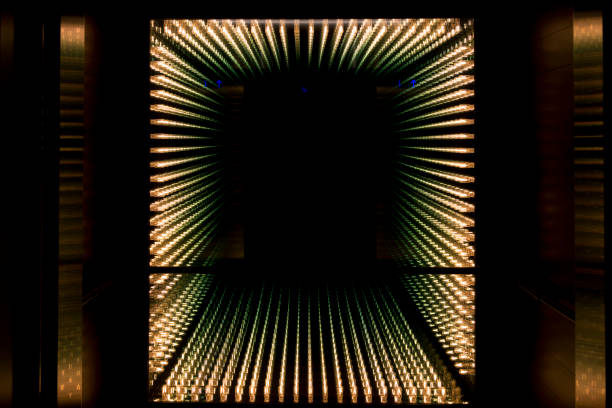
Is poetry a mirror or a lamp on the world?
If poetry is a mirror on the world, reflecting what is there, then it is surely a funhouse mirror, distorting what is there. Everything is bent, fragmented, stretched, and/or widened. Many free verse poets argued precisely this, that it would be their free verse poetry that would finally provide this mirror on the world, no longer distorted by rhythm and rhyme. The surrealists also made this claim. Who, now, would agree that the surrealists provided any kind of mirror?
If poetry is a lamp, lighting up the darkness in the world, then it is surely more a moon than a sun. (Ah, but the moon itself is reflective!--a kind of mirror of the sun, imperfect and dimmer.) While the Greeks considered Apollo, the sun god, to be the leader of the Muses, practically every other polytheistic mythological tradition considers the moon goddess to be the source of poetry. Poetry is thus considered to be a product of the moon--a dim light within the darkness, playing with the shadows, perhaps part of the shadows themselves, with the shadows moving, undulating, as the poem's light crosses the darkness, faintly uncovering what lies where people fear to look.
Orpheus descends into the underworld to retrieve his wife from death, but can only return with his poetry. There are many traditions of men descending into the underworld to retrieve something but are only able to return with the gift of poetry.
Plato, in the Allegory of the Cave, instead shows a man ascending out of the cave and into the sun, where he is enlightened. He then returns to the cave to bring the people knowledge of what he saw. He argues that most would reject the philosopher bringing the good news of the sunlight outside the cave. The philosopher thus comes closest to bringing a lamp--but in reality, he's attempting to bring the people to the lamp/sun, which requires persuasion. If you live in dimness and only view shadows, how could you believe in the light?
The poet, on the other hand, can bring the same information to the public without rejection. Why? Because the message is hidden under imagery, metaphor, and sound. The reader is first enchanted by these things, which creates the conditions for acceptance. Of course, this is hardly perfect. There have been plenty of persecuted poets in the world--burned at the stake, in its various metaphorical forms.
Plato wrote in dialogues in an attempt to bring the light of philosophy to the people in poetry. He felt the best poetry was that which was true, and which was trying to get people to see the truth. If this is your goal, remember that you have to do it under a veil.
Too many attempt to make their poetry either a lamp or a mirror. Didactic poetry, ham-handed political poetry--propaganda for a party and an ideology--are almost universally failures. The existence of the brilliant Langston Hughes hardly proves the opposite. Neither you nor I are Langston Hughes. And he had enough sense to write his poems by moonlight.
Having the right understanding of poetry will help you write better poems. For many of you, I am sure that you are already in this kind of lunar headspace and are thus proper lunatics. Some of you are perhaps a little (or a lot) prone to wanting to shine the sun on the world. Alas, such poetry doesn't last, as it mostly annoys readers, preaches to the choir for those who do like it, and really doesn't last. Instead, bring your truths to the world in imagery, metaphor, sound, fable, parables, mythology, and other forms of narrative. Afraid there will be many interpretations of your work? Then write essays. Everyone will bring their own perspectives to your poetry, when it's good, and if you're particularly good (and if you're particularly metamodern), you'll bring multiple perspectives to your reader within your poems themselves.
Monday, October 31, 2022
Against Self-Expression
If you search for images of "self-expression" on Google, you'll get a collage of photos that are going to look like this. I could think of no better way of showing exactly what I mean when I talk about--and criticize--self-expression.
The irony here is that in all of this so-called self-expression, the results are almost universally identical. It's all a miss-mash, with lots of color. What this suggests is that everyone's self-expression is like everyone else's self-expression. And what does that mean for either the self or it's expression? It means you're just like everyone else if this is what self-expression looks like. And that's precisely the problem with self-expression as art. It isn't art. It isn't even, as one of the pictures suggests, self-love. Love is always of a particular thing or person, and if there's anything this example of self-expression is not, it's particular.
With that kind of introduction, it's probably not surprising that I would say that perhaps the worst thing that ever happened to poetry was the emergence of the cult of self-expression. Although one can find this cult at play in the other arts, it seems to have hit poetry the hardest, and ruined several generations of poets.
Of course, the opposite end of this is the kind of academic poetry that is only produced in university English departments, only read by other academic poets, and only commented upon by academics trying to get scholarly papers published--a task made easier when one is dealing with "difficult" poetry.
Karl Popper once defined true artists as those who are attempting to work out artistic ideas and problems--which is to say, those related to myth, structures, traditions, etc., in light of changing social conditions in which the artists are working. It is an evolutionary process, and it always is in touch with what came before it.
Certainly, one could argue that contemporary academic poetry is doing precisely that. However, the avant-garde, as the academic poets fancy themselves to be, pride themselves in making radical breaks with the past. This is, of course, unlikely to be literally true, in much the same way that the surrealists never really allowed their "automatic writing" to go unaltered (a simple example: what are "automatic" line-breaks?).
The real problem with what I'm calling academic poetry is that it, much like academic art in general, is created after the "artist's statement" is created--even if it's created only in the artist's head. This is in part the fault of most of our artists having become academic artists because they first passed through university classes.
The funny thing, though, is that the undergrad poetry writing classes all tend to encourage "self-expression." The professors don't want you to stifle your self-expression by using form or any kind of constraint. In the meantime, many of them are writing poetry most of their students wouldn't understand. As the creative writers move into grad school, those who are writing more academic poetry tend to get more encouragement while the self-expression poets get left by the wayside.
One of the main problems with self-expression poetry--and the reason it gets left by the wayside, and why most such poets eventually stop writing--is that there is really only so much self to express. Most people are like most other people. And really, almost nobody has anything particularly interesting to say--and if you do have something interesting to say, it's likely going to be said in a few poems, a few short stories. And then, you'll be done.
While the academic poets do seemingly at least try to work out some kind of artistic problem, the problem they have is that they don't produce anything anyone wants to read. Not even the academics writing scholarly papers on today's academic art aren't interested in it. They just need to publish, and it's easier to publish something on a work that is contemporary and difficult and, therefore, hasn't been touched by anyone else, than it is to try to say something new about Shakespeare's sonnets, for example.
This would seem to put us in a quandary. If self-expression doesn't create lasting art or artists, and academic poetry isn't going to be read by anyone, when where does that leave us?
Fortunately, these are not the only options.
Another way forward is to first abandon self-expression as self-centered, narcissistic, and indulgent; then, we need to familiarize ourselves with the global traditions, become global classicists, and familiarize ourselves with the world's myths, poetic structures, and forms. We must keep in mind, though, that postmodern academic art is now part of that tradition. It was at least participating in the art of poetry in the Popperian sense, even if it sent itself into abject unpopularity due to the direction the poets went with it. However, to move forward, we have to bring things back to foundations, writing works that people would actually want to read, because they tap into the brain's love or rhythms, sounds/music, and archetypal imagery. Challenge, yes--but do so from a place of familiarity.
None of this is to say that you will no longer appear in your poetry. How is that even possible? Your poetry is necessarily going to reflect your world view, your attitudes, your fundamental beliefs, your passions, and so on. How can they not? Just don't make the mistake of either thinking that your art is all about you, and do not think your poetry is going to change the world because you're undermining capitalism by subverting grammar or some such nonsense. You're not. That's not how poetry works. Its power is elsewhere.
Remember, the Muses are the daughters of memory and inspiration, of what your brain retained of external knowledge, and the way your brain unconsciously processed that knowledge through your emotions. The "you," the "self" that is being expressed is in that unconscious processing leading to inspiration. It's not vomiting your emotions onto the page. Indeed, self-expression is the subversion of poetry to your emotions, ideas, and thoughts rather than entering into a dialogue with the world's other poets, and your audience. You have to love the art enough that you want to serve it rather than make it serve you. And that means entering into the global history of poetry, bringing not just yourself, but your contemporary society, culture, and knowledge with you.
Monday, October 17, 2022
Defining the Undefined We Know
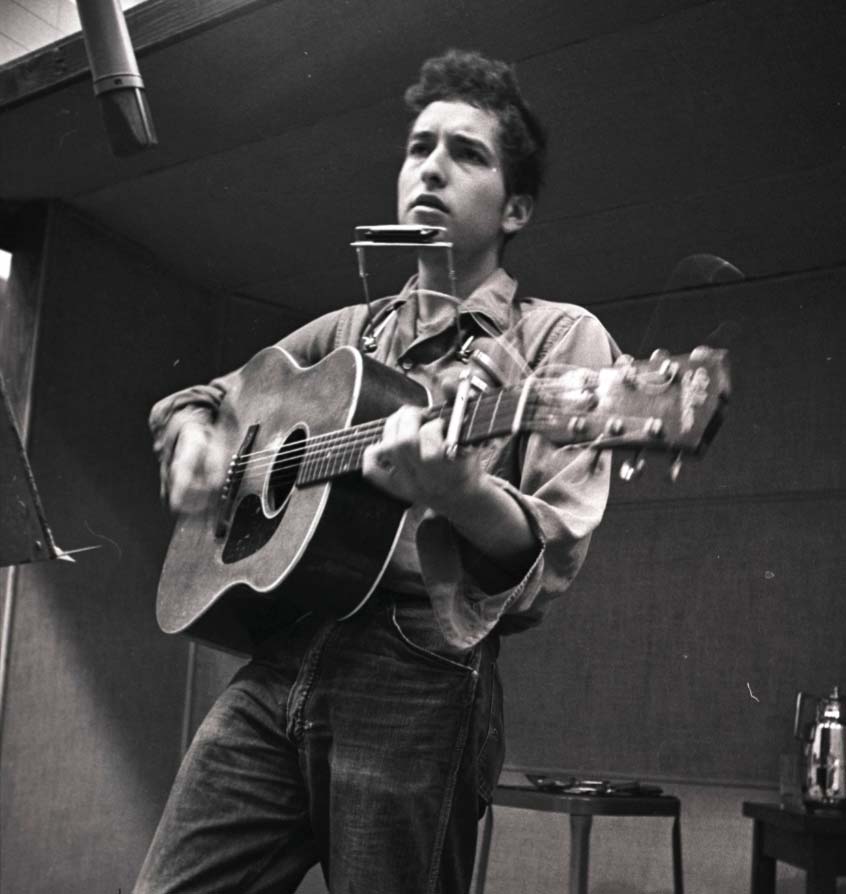
We forget that poetry had its origin in song. The Iliad and The Odyssey were sung (can you imagine memorizing those songs?). The Greek tragedies were sung. So rock music, blues, etc. are much more originary in their poetry than what we now consider to be poetry is.
Unless you understand what poetry is and its history, nobody should take you seriously as a poet -- least of all yourself. In the same way that if you can't draw a picture of something someone could clearly and obviously recognize, you're not an artist no matter how much paint you fling around, if you can't write a sonnet or some Sapphic verse, you're not a poet. Artists have to know the history of their art if they're ever going to be worth anything. Even such Modern poets like Ezra Pound, who famously said, "make it new," understood that. So has any poet that has ever lasted. Walt Whitman didn't write free verse because he couldn't write a sonnet (which seems to be the case with too many poets these days), but rather he wrote in free verse because, having mastered the forms, he wanted to push poetry into new territory. As an artist, if you don't know where you came from, you are lost. The fact that poetry has its origin in song is vital to understanding poetry at all and thus to making poetry worth reading. In the same way, it's important to understand that your egg came from a chicken if your plan is to make more chickens. But it doesn't matter what animal an egg comes from if you're going to mess it up, break it down, and chew it up -- the end result is crap. I still prefer chicken eggs, though.
So, what is poetry? How can we identify it? Can we talk about its essence? You should at least have read a sufficient amount of what has been identified as poetry -- both past and present -- to have created some sort of concept, even if you can't create a scientifically acceptable definition of poetry. How else will you be able to tell the difference between poetry and prose? I've read poetic prose and read prose broken up into lines. If you can't sing it or dance to it, it's probably not poetry. A lot of prose has been mistakenly called poetry -- but if we call everything poetry, then poetry indeed has no meaning or definition.
The issue of definitions goes back to Socrates (and likely before). Remember that Socrates was always asking experts to define the thing they were expert in. Every time he would do so, he would find them giving him examples of, say, justice or piety or love, but they could never define the thing itself, which Plato developed into a theory that such Ideas or Forms were external to the world, which was just a poor set of shadows of the real. Nietzsche observed that we create ideas or concepts by looking at a set of unidentical similar objects and subtracting away the dissimilarities. Wittgenstein observed that this results in objects being able to be conceived and reconceived due to "family resemblances." A shoe is not a hammer, but it can be used as a hammer, so when you reconceive of a shoe as a hammer, you are saying it has a family resemblance to hammers.
All of this is to say that if we are trying to come up with the Platonic Form of poetry, we will never succeed, since such a form does not exist. However, we should be able to look at a sufficient number of poems and be able to work out their family resemblances. Along those lines, whatever your definition of poetry is is going to be a good start. Can we add to it? Subtract from it? The use of tradition as a criteria (I think one should have that as a criteria in the arts) suggests that we should put quite a bit of weight on past "verbal happenings." If we look at poetry around the world, such works have repeated structures (whether rhythm, rhymes, parallelism, etc.) and are broken up into lines that take optimally 3 seconds to speak -- not coincidentally, our short term memory works best in 3 second chunks. These are typical, but are they necessary?
Let's also return to the issue of song and poetry. There is no question that poetry began as song -- but there is equally no question that there was a bifurcation, resulting in the two traveling down somewhat different (though periodically intersecting) paths. Where does one draw the line? Many poems can be sung -- does that make them songs? I have sung my daughter's Dr. Seuss books to her (had to throw some variety in, since I read her the same books every single day), but I don't think Dr. Seuss intended his books to be sung. I suppose we could look at songs as "low art" vs. the "high art" of poetry -- especially modernist and postmodernist poetry, which is read (and sometimes enjoyed) almost exclusively by overeducated people like me -- but I don't like such distinctions, as it creates an unnecessary bifurcation in the art. A great work of art is one where anyone can enjoy it, but the more you know, the more you appreciate the work, one where repeated readings/viewings/listenings result in your coming to understand the work more and more. Perhaps by reconsidering song as poetry and consciously including it in the tradition, we will come to a better understanding of what poetry is, and become better poets ourselves.
Monday, October 10, 2022
Alienation and Hating Poetry

 *
In The Hatred of Poetry, Ben Lerner, a poet himself, makes the argument that people hate poetry because 1) they think that just because they are a language-using human, they ought to be poets themselves, and 2) actual poetry fails to live up to our ideal of Poetry.
My gut reaction was that this was utter nonsense. However, I came to realize that there are a few other fields in which this is true. Take economics. Everyone thinks they ought to be able to make pronouncements about economist just because they are human beings, we buy and sell in the marketplace, we work, and so on. We make value judgments about people's behaviors, often envy those who are better off than us, and typically believe actual economies fail to live up to our ideal Economy. As a result, most people hate economics and economists.
I would add to this psychology, sociology, and political science.
At the same time, there are a number of areas where people don't make this same mistake: math, physics, chemistry, biology, and even many of the other arts, including sculpture and painting (though some Modernist and postmodern works have people saying, "I could have done that" or "My three year old could have done that"), music and acting are typically things we don't think we can do without some degree of expertise.
Why is it that people who don't read poetry and don't like poetry feel a need to express an opinion about poetry when those same people wouldn't do the same thing about recent publications in mathematics? It seems there are a set of things people do that others seem to hold in contempt because they fancy themselves able to do them, while there is another set of things people seem to admire (or at least not hold in contempt) simply because they know they couldn't possibly do them.
The reason people don't like poetry may have something to do with the fact that everyone thinks they can do it, and that bumps up against what actual poets are doing. Much like economists--everyone thinks they understand the economy, and they get mad when an economist comes along and tells them they're wrong about how they think the economy works. There is a disconnect between what the person thinks they can do and what the experts in fact do, between what the experts understand and what the average person understands.
Why, then, do people who hate poetry love songs? After all, isn't a song really just a poem? Of course. But songs are more directly tied into music, and only rarely are songs constructed such that they are as complex as many poems often are. More, they are heard rather than read, and reading is a difficult cognitive process which we can only do because the brain itself reconstructs itself--certain parts of itself are already designed for other things--in order to be able to read. Then, what is read has to be passed through this section of the brain before it is sent to the language portions of the brain. The musical element poetry (when present) is suppressed relative to songs, so poems are neither really read nor sung while, at the same time, both read and sung.
We can look at this in another way, by comparing Shakespeare read and Shakespeare viewed/heard. The same people who find Shakespeare "boring" when they read him are excited watching a play (or film). The same things that bore them when they read Shakespeare move them to fear or laughter or tears when they watch the play performed and hear the words spoken. Why is it boring when read and not boring when viewed (ignoring those who still find it boring when viewed, since other issues may be at play there--I am only interested in the disconnect between the attitudes of reading vs. hearing/viewing). This would point to my suggestion that, in the case of poetry, part of the disconnect comes about from the fact that poems are read, which makes them, in many ways, more complicated.
The fact that poems are read rather than heard also invites contemplation and analysis. One can look at the words and think about their varied meanings. This further complicates one's relationship with poems. The more you interact with a poem, the less likely it seems you are able to write one. Yet, you are still convinced that you ought to be able to write a poem. It's all just language, after all, and you are a member of a language-using species.
When we take literature classes, it's not uncommon to hear that poetry is a "higher" form of language. The problem is, if poetry is a "higher" form of language, and language makes us human, then poets are logically, it would seem, a "higher" form of human. Who wants to believe there are higher forms of human than themselves? Who doesn't want to be a higher form of human? Thus, many likely feel the poets are looking down on them more than a bit, and this breeds contempt, as all (perceived) elitist behavior breeds contempt for those exhibiting it. It probably doesn't help that many contemporary poets are in fact elites who love to flaunt their elitism in the creation of works that only fellow-poets are capable of understanding (or at least who claim to understand). This, perhaps, is one major source of hatred for (contemporary) poetry.
The same belief doesn't necessarily apply to painters. We may be impressed with the work of a painter, but we don't think the person is a "higher" form of human. We consider them to just be an artist expressing themselves. It's something we can't do, true, but for some reason we just chalk it up to practice or a skill we simply weren't born with. The fact is that, like artists, poets are just artists expressing themselves. Poetry writing is simply a skill honed through practice. There may be something in us that drives us to express ourselves--in our case, in language--but that again makes us no different from any other kind of artist. Language is our medium, but that fact doesn't necessarily make us a higher form of human.
Lerner suggests that these attitudes many people feel toward poetry are a consequence of Plato's attitude toward poets. The Greeks considered poets to be inspired by the Muses, meaning they were conduits for the gods. They were chosen by the gods. Meaning they were special. This is another way in which people think poets are some kid of elite. While we in the West seem to still have that attitude, even if not quite expressed as God/the gods favoring the poets, the question is if other cultures hold this same view and thus think the same way about poets. Or, are their attitudes toward poets more like our attitudes toward painters and mathematicians?
I would argue, then, that people tend to express contempt toward those things which they think ought to be easy, but which "experts" in the field keep demonstrating to be complex. They have respect for difficult things they think are difficult, and they likely don't think much at all about those things that they think are easy that are in fact easy (for pretty much everyone), or at least easy to understand. You might not be able to play the guitar, but rock music seems easy to understand. Jazz, on the other hand, is more difficult to understand, and as a result many people don't seem to much care for it (part of this may also be simple familiarity--as we learn to hear something, we grow to like it).
Overall, I don't think that having or lacking interest in any of these particular things is what's at play here. There are sets of knowledge/skills we seem to respect and others which we do not. A person may not be able to do math, and may not personally like doing math, but still hold a great mathematician in high esteem. They're not going to engage in the math nor make the mistake of having an opinion about the math being done that they cannot do. As a result, they simply respect the mathematicians who can do those things. But when you have a person who is not an economist and is generally ignorant of economics, that doesn't mean they won't have an opinion about economics. The same person who lacks interest in learning math and economics will refrain from having an opinion about math and give their opinion about economics.
So it seems that interest isn't really what's at play. Again, I think it's precisely the disconnect between apparent simplicity and the real complexity that creates this contempt toward poetry, economics, sociology, and psychology, among other things. I know I don't know anything about how to repair a car, so I respect auto mechanics. For the longest time I thought I could write and understand poems when I really couldn't. Thus, I started out with a hatred of poetry and a degree of contempt for poets--which has changed as I have slowly learned to understand poems and how to write them. I suppose I lost my hatred of poetry because I never really bought into the idea that there was this unattainable ideal of Poetry which can never be realized by any real poem.
The less disconnect, the less alienation one feels, the less hatred one feels. That's probably something to consider in regards to things well beyond poetry.
What do you think? Is there anything we contemporary poets can do to reduce the hatred of poetry, short of ostensibly "dumbing down" our poetry? Is the problem the way people write poetry, as esoteric texts? Is the real problem that contemporary poetry, like much contemporary art, is simply not perceived as beautiful? Is it because we only read and rarely ever listen to poetry? (Poetry slams are quite popular, and draw in non-poets, while poetry journals almost never draw in non-poets.) What can we do so readers are no longer alienated from our art?
Monday, October 3, 2022
Parrot Literary Corner - EP08 - Poetry and the World of Troy Camplin
Here I am interviewed by Parrot Literary Corner, where you can get a bit of my philosophy of poetry.
Monday, September 12, 2022
Poetry, the Quadrivium, and the Trivium

The Trivium is part of a Medieval educational system that was designed to provide the student with a complete education. The Trivium is made up of grammar, rhetoric, and logic. The other part of that educational system was called the Quadrivium--arithmetic (number), geometry, astronomy, and music.
You may be wondering what the Quadrivium could possibly do with poetry. Well, one can view geometry as number in space (patterns), music as number in time (rhythms), and astronomy as number in space and time. Using this formula, one could easily argue that well-written poetry is akin to astronomy, especially those poems that use things like iambic pentameter (note the use of number--"penta" means "five," which is the number of iambic syllable patterns in a line). As John Steinbeck once wrote, "Poetry is the mathematics of writing and closely kin to music."
We have already spent a great deal of time discussing several aspects of the Quadrivium within poetry, even if we haven't exactly been calling it that, and we will spend even more on the issue of number in the future. However, for this lesson, I want us to focus on the Trivium.
Poets, perhaps more than anyone else (excepting lawyers), must master the Trivium.
Mastery of grammar should be obvious: how can you be said to be a language artist if you have not mastered the language itself? Only if you fully know and understand why your language works the way it does can you properly use it, beautifully use it, twist and bend it. Thus, it is important that one understand how the different parts of speech work, what kinds of sentences there are, and how to diagram sentences. To be a poet, one must love language enough to want to know how the words and the sentences work.
I'm not going to be spending time on grammar lessons. That's not the point of this blog. I'm assuming you have mastered grammar and that you are here to learn about the tools you need to write poetry, and to give you some ideas about poetry writing, challenge the way you think about poetry, and provide you with my own ideas about poetry. However, there is much that can be said about the other elements--logic and rhetoric--and their importance to poetry.
First, logic. You may think that logic has nothing to do with poetry. You may even have some romantic idea that poetry transcends logic and reason. And you are, perhaps, right about the latter statement. But, in order to transcend something, you have to include it. But there is, as I have argued, a rationality in poetic verse.
Poetry both infers and, in complex ways, demonstrates. Logic shows when inference and demonstrations are valid. We have to keep in mind that the word "logic" comes from the Greek "logos," which can be translated as word, account, thought, reason, idea, or principle. A dialogue thus occurs "through logos"--meaning there is necessarily a logic to dialogue, and thus to plays, which combine action with dialogue. Insofar as poetry is made up of words and ideas, and are products of our thoughts, it should be clear that we cannot avoid logic. Logic just clarifies our thinking.
You have perhaps heard complaints about "logocentrism" and about logic itself. However, those who oppose "logocentrism" have to use logic to make their arguments. Those arguments can only be better or worse, and use good or bad logic, but logic is inescapable. Given this fact, I would argue that you should master logic--certainly before you can criticize it. And at least a familiarity with formal logic should benefit your thinking and, thus, your poetry. (Symbolic logic is another thing altogether--we'll leave that to the logicians over in the philosophy department.)
Rhetoric is the art of making an argument, the art of persuasion. Each work of art is trying to make some sort of argument, and the language arts perhaps more clearly and obviously. After all, we make most arguments using language. Thus, rhetoric is central to all forms of poetry.
Aristotle argued that good rhetoric requires the use of logos, ethos, and pathos.
Logos we have just covered.
Ethos, from which we derive the word "ethics," has to do with the reader trusting the writer or speaker. Part of persuasion comes from your reader trusting you, and you can only create true trust by being a trustworthy person. How that can be demonstrated in a poem will certainly vary form poem to poem, from topic to topic, and is perhaps less tangible in poetry than in a scholarly paper or a speech.
Pathos is emotion, how we create emotion in our writing or in a speech. We do not create true pathos by being melodramatic or sentimental. It has been said that sentimentality occurs when there's a lack of sentiment. Sentimentality if felt by the reader when the writer fails to communicate emotion well. One could perhaps say that sentimentality is pathos without ethos.
It should be obvious that pathos is central to poetry. It's perhaps the one thing most early poets focus on--sometimes to the exclusion of all else. Which is why there is so much sentimental poetry out there. The way to create true pathos is through the use of appropriate imagery and through the use of story. But in the end, like most aspect of poetry, it takes practice to communicate emotions well, and you are bound to miss the mark on either side, by being either too sentimental or too cold. More, what works for one reader won't work for another. You just have to play the numbers--if you find a large-enough number of your readers get the emotion in the poem, you can consider it a success in its pathos.
To be persuasive, you have to have good style. Of course, good style means different things for different kinds of writing. "A good style must, first of all, be clear. It must not be mean or above the dignity of the subject. It must be appropriate" (Aristotle). The style of an article intended for a mass audience is necessarily going to be different from that intended for scientists with advanced degrees, and both should be different for different kinds of novels, whether romance or literary, and everything in-between. And of course, poetry should itself have its own, and each poem should have its own, style.
Style is more than just decoration. "Style ought to prove that one believes in an idea; not only that one thinks it but also feels it" (Nietzsche). The reader ought to be able to feel your conviction. Style, then, is part of the ethos of rhetoric.
It is important for poets to master the Trivium. The Trivium must be mastered before you can challenge any part of it--if you decide to challenge any part of it. To paraphrase Don Barthelme, you have to be able to write masterfully well-written sentences before you can write bad sentences in your poetry or prose. Thus, it is important to know the rules of the language before one can challenge them. And challenge them we must for, as Octavio Paz once wrote, "Social criticism begins with grammar and the re-establishing of meanings." The greatest poets have always challenged the rules of grammar, logic, and rhetoric--and of ethos and pathos. But they have also always been their masters as well.
Monday, August 22, 2022
Metamodern Poetry: An Introduction
Abduction, by Jesse Mockrin
Here, at last, is the promised post on metamodern poetry--or, at least, what I think metamodern poetry is and ought to be, or at least, how I practice metamodern poetry. In other words, I'm going to present you with my theory of poetry writing. In any class on poetry writing--even in a blog of mini-lessons--one ought to know the teacher's theory of poetry. That way, you know where they are coming from, and you can make up your own mind about what you want to pay attention to and what you want to ignore in the development of your own poetry.
There are several ideas on what "metamodernism" means, from cultural analyses to aesthetic ones. Obviously, we are more interested in the aesthetic aspects, but both are concerned with the synthesis of Modernism and Postmodernism, and with the affirmation of paradox. In aesthetics, the affirmation of paradox includes such things as bring both serious and ironic simultaneously, or in turn.
Now, depending on what one means by "Modernism," a synthesis of Modernism with Postmodernism can mean several things. Aesthetic Modernism is typically considered to have developed in the late 19th through early 20th century. Literary Modernism can be considered to have started with any number of writers, though I would argue that its foundations are certainly in such writers as Walt Whitman (free verse), Flaubert, Dostoevsky, and Baudelaire.
With the aesthetic Modernists, there is a self-conscious break with past forms and an infusion with the ideas of people like Nietzsche, Freud, and Marx. However, there is another kind of Modernism, which starts much earlier, with the work of Descartes, and which has its origins in the Renaissance (which itself created a break with the past, with Medieval culture). This era comes to an end with the ideas of Nietzsche, Marx, and Freud, who are the fathers of Postmodern culture, which can be considered to have begun (in my mind) at the same time as Aesthetic Modernism.
Meanwhile, what we consider to be Aesthetic Postmodernism began in the 1960s with the advent of pop art in the visual arts and in literature (with Don Barthelme, who is often considered the father of postmodern literature). Postmodern art tends to be fragmented, and gradually became academic art, dominated by university artists and writers. Postmodern art gave us and is the product of the creative writing class at our universities.
Metamodernism in both cases is an attempted synthesis of Modernism and Postmodernism. However, an Aesthetic Metamodernism that only embraces and synthesizes (in an atonal fashion, without full synthesis of either) Aesthetic Modernism and Postmodernism is going to be different than one that embraces and synthesizes (again, agonally) Cultural Modernism and Postmodernism. After all, the literature of Cultural Modernism included Enlightenment literature, Romantism, Neo-Classicism, Realism, and Naturalism, while Cultural Postmodernism includes Aesthetic Modernism and Postmodernism.
For my money, I think that Aesthetic Metamodernism ought to include influence from all of the movements within both Cultural Modernism and Cultural Postmodernism. A consequence of this is that I fully embrace all of the formalism used in the literatures of the Enlightenment, Romanticism, Neo-Classicism, Realism, and Naturalism as well as the aesthetic discoveries made by the Modernists and Postmodernists of the past 150 years or so. It makes little sense to me to only embrace Aesthetic Modernism and Postmodernism, as there is much more continuity between them than the Cultural versions.
Indeed, I would argue that Aesthetic Postmodernism is the "normal art" of Aesthetic Modernism. Here, I'm using Thomas Kuhn's paradigm theory and applying it to the arts. Aesthetic Modernism was a paradigm shift, but Postmodernism wasn't. Postmodernism was merely a fine-tooth development of all that Modernism had discovered in the aesthetic realm. This had happened, too, with the Academic Art of the 19th Century, where the Academic Artists merely covered the same ground as the Renaissance, Baroque, and Rococo periods, and whatever they developed was well within that paradigm. Postmodern art, too, does the same thing--and it's even more properly called "Academic Art" due to its almost exclusive presence in our Universities and by those trained in our Universities.
If Metamodernism is to be a new paradigm shift, it will have to do something revolutionary in relation to the Aesthetic Modernism/Postmodernism that runs through Cultural Postmodernism.
What will that look like? I have a few suggestions. While such wonderful novelists as Dave Eggers, Michael Chabon, and Jonathan Franzen are now considered Metamodernists, from the standpoint of their being part of the New Sincerity, I have to wonder if they are truly revolutionary. Perhaps closer to what I'm talking about are writers like Zadie Smith, Haruki Murakami, and Frederick Turner, who synthesize the Modern with the Postmodern, and their own cultures with others. Further, Turner writes sci-fi epic poetry, which synthesizes a more ancient form with a more contemporary one.
My own version of Metamodernism looks more like Frederick Turner's, as he describes his aesthetics in his nonfiction books, Natural Classicism*, Beauty*, and The Culture of Hope*. In other words, a synthesis of Postmodernism, Modernism, Medievalist literature, and ancient literature, as well as not just the West, but cultures across the world, from (ancient to contemporary) China and Japan to India and Iran, Mali and Nigeria, the Americas, and throughout the world. This would include a recognition that there's no such thing as an "African culture," for example (an idea which is the ultimate kind of kitsch), but rather that there are hundreds of different cultures across Africa, about which we should all learn something, and whose literatures we ought to be reading just as much as we ought to be reading the works of the ancient Greeks and Romans. In other words, in Turner's formulation, we ought to embrace a "natural classicism."
If you were to embrace natural classical metamodernism, what kinds of poetry do you think you would produce?
Monday, August 15, 2022
Inspiration and Knowledge
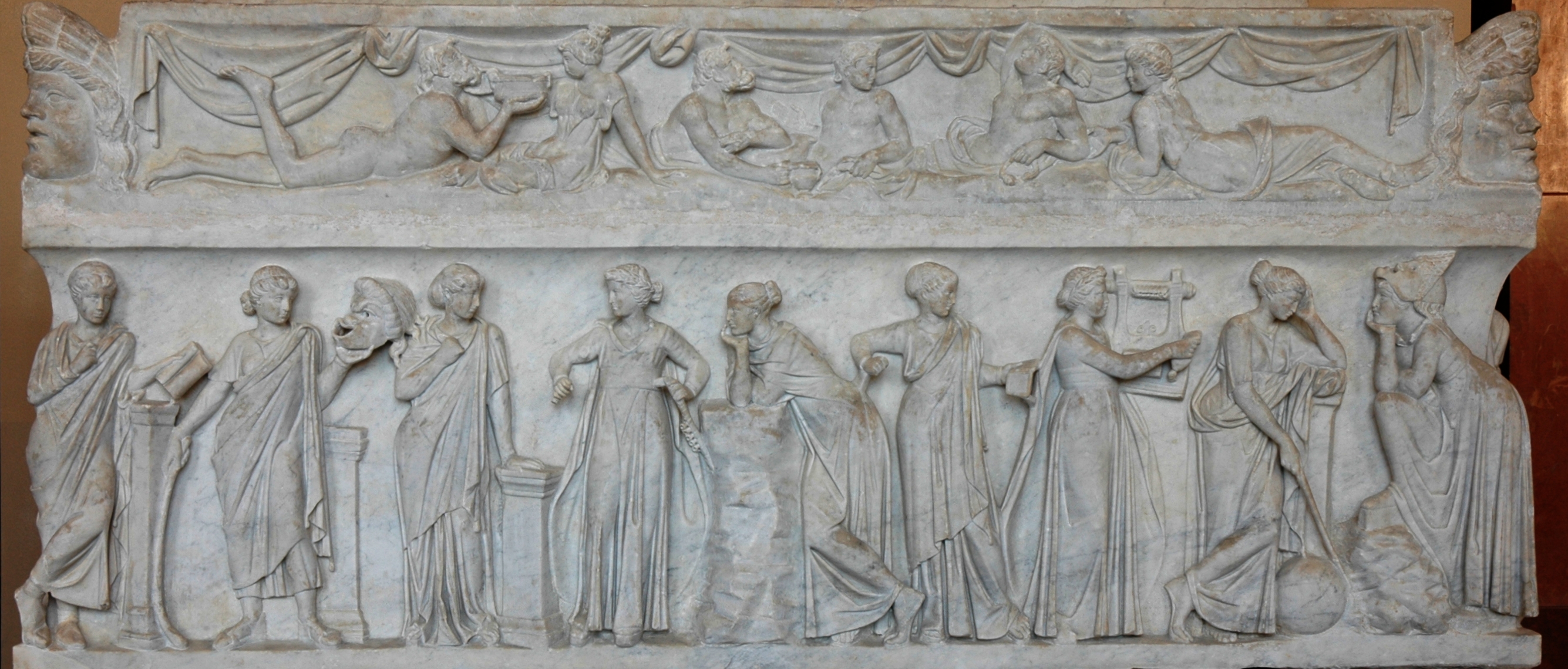
The Greeks believed that the Muses were the offspring of Zeus (God) and Memneke (Memory). One way of understanding this insight is that poets produce their art due to a combination of inspiration and memory.
In other words, we have to have some kind of knowledge in order to create good poems. You cannot be an ignorant poet. Indeed, one could argue that there is no such thing as a great poet who is ignorant. Think about the great poets. Goethe was a scientist who studied the physics of light and biology, a bureaucrat who helped manage a princedom, a well-read writer, and a traveler. He studied languages and history, read philosophers and ancient writers. Shakespeare demonstrated his knowledge of the Trivium, of history, of philosophy, and of the literatures of other cultures in his works. Keats was a doctor, as was Chekov. The point is that these were educated people.
The poet must be an educated person. Not just educated in a narrow sense--having a B.A. in English, a M.A. in English, and a Ph.D. in English is being educated in a narrow sense--but in as broad and universal a sense as possible. There are English-major Marxists, English-major Freudians and Jungians, and English-major theorists; unfortunately, actual economists, psychologists, and philosophers barely recognize the English-major versions of their fields.
This is not to denigrate English as a degree. I do, after all, have a major in English, a Master's in English, and a Ph.D. in the Humanities that focused on creative writing and literary studies, and I learned a great deal from my literary theory classes--and I took as many literary theory classes as I could, because I enjoyed them so much. However, I did also major in biology and minor in chemistry, I do have two years of graduate classes in molecular biology, and I taught myself enough economics, psychology, and sociology to have peer-reviewed publications in those fields. I have studied mythology on my own and to get my Humanities degree. I truly believe in the synthesis of science and the humanities, that there shouldn't be "two cultures." I don't know if any of this makes me a great poet, but it certainly means I have a great many things in memory.
This knowledge of course has to include thousands of poems, as well as novels, short stories, and plays. There is no such thing--anywhere at any time--as a poet who is anything less than mediocre who isn't well-read. This "reading" includes oral traditions, including songwriters who are inspired/influenced by other songwriters. There's no such thing as a writer who wasn't a prolific reader. The two go hand-in-hand.
But knowledge and ideas are not enough. We also need inspiration.
The word "inspiration" literally means "breathe in." However, in many languages, the word for soul or spirit is "breath." To have inspiration is thus to have a spirit within you. You may call that spirit God, or you may call it, along with Socrates, a "daimon," but whatever it may be, it feels like it's coming from somewhere other than yourself. It's certainly coming from somewhere other than your conscious self. If you feel inspired, there is a kind of sudden insight that makes you want to write (or paint, or make music, etc.).
If you prefer a less mythical/mystical version of inspiration, there's also a psychological one. Our minds are often working on problems in the background, then feed the finished solution to our conscious minds all at once, in what we call "a flash of insight." This can happen with scientists--Einstein being a famous case, with his insight about relativity coming to him in a dream--and it can certainly happen with poets.
With poets, though, inspiration is more of a learning something that is of personal importance to us. That is, it's a kind of subjective knowledge. When we communicate what we have learned in verse, we express poetic truth. How well we communicate that truth depends upon our skills as poets.
When you communicate your subjective understanding, you add to the wealth of human knowledge. We need your insight, your understanding, your interpretation of things--and we need you to write so well someone will read it, so it actually becomes part of human knowledge by becoming a part of your reader and how your reader ever after thinks. And that means writing something people can and will remember.
At the same time, if you are only relying on inspiration, you may write a few dozen poems in your life, none of them any good. As we've already seen, there's more to writing poetry.
Monday, August 8, 2022
Secular Free Verse vs. Religious Formal Verse
 E.E. Cummings, "The Grasshopper"
I think there are good reasons why formal poetry the world over preceded free verse and artistic prose. Those reasons are likely to be biological rather than directly connected to religion, but the ancient naturalness of both seem to be connected.
On the other hand, free verse and the non(anti)-formalist verse that followed seem to be distinctly secular in manmade-and-therefore-"unnatural" fashion. (There is nothing unnatural humans do, though there are choices which are more conscious and choices which are more instinctual, even if the latter, in poetry, follows manmade forms.) The anti-formalists often argued that formal verse was antidemocratic, indeed, elitist—while their verse was democratic and anti-elitist. Of course, the opposite was true. People prefer lyrical rock, country, and rap songs to surrealist, LANGUAGE, and postmodern poetry. It was the latter which the masses hated, loving formal verse.
With the addition of music especially, formal verse seems to tap into a deep Dionysian element that much 20th century free verse and almost all postmodern anti-formalist poetry completely discards in favor of the Apollonian. Formal verse seems to tap into the very rhythms of the universe—including our mental/neural universe—which makes it deeply religious in its experience. This is something free verse, and especially anti-formalist verse, cannot typically create, whatever other interesting elements they may have. In this sense nonformalist poetry is deeply secular insofar as it cannot connect us to those deep rhythms which we describe as religious.
Poetry is likely to have its origins in song. Songs and poetry are the reunion of language and music, which bifurcated from an ancestral primate mating song (think gibbons). Indeed, we know that The Iliad and The Odyssey were sung, and these were religious texts. It seems likely that perhaps most initial songs were connected to religion as well. Of course, if you want to get right down to it, songs and dancing were both likely connected to mating calls and sexual demonstrations (as they still do). At the same time, I am convinced that the emergence of language gave rise to the simultaneous emergence of religion. Which may be why the earliest narratives are religious texts. This double origin of poetry—in sexual music and language-giving-rise-to-religion is probably why there is so much tension with religion and sex in poetry.
If the idea of formal/rhythmic verse being "religious" makes you uncomfortable, think rather of it being connected to the spirit, of being spiritual. There are many spiritual traditions, and they all had formalist kinds of verse associated with them. More than that, if you want your poetry to make a kind of spiritual connection with your audience—if you want a Dionysian element to your poetry—then formalist verse is truly the way to go.
This isn't to say that formalism is superior to non-formal verse. The Modernist non-formalists certainly made some major contributions in the creation of free verse and in surrealist poetry. However, I would argue that, for the most part, postmodern non-formal verse is primarily academic in nature, and the content of such poetry reflects that fact. The academic poets do have something to say, and they do have something to contribute to poetry as a form. What would perhaps be interesting, though, is the synthesis of what the non-formalists have discovered with the spiritualism of the formalists. It doesn't have to be either-or, after all. Both-and can crate some interesting works.
Subscribe to:
Posts (Atom)
-
If you were to come across a ten-syllable lined poem, you would probably expect it to be iambic pentameter. And you would probably be right...
-
Abduction, by Jesse Mockrin Here, at last, is the promised post on metamodern poetry --or, at least, what I think metamodern poetry is and ...
-
* Verse is metered language. What, though, is meter? "Meter" comes from the Ancient Greek "metron," meaning "measu...

